


Reports | 25 05 2020
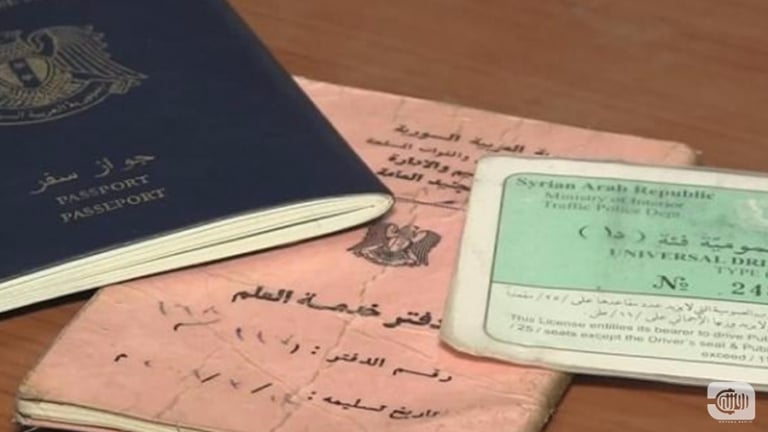
The Syrian refugee Hasan was unable to document his son in the civil registry at the Jordanian authorities, because of confiscating his official papers since 2012, while entering the border crossings into the kingdom.
Hasan said to Rozana: "they confiscated my Family Book and my Identity and the Marriage Contract when I first entered Jordan with my wife in 2012, and I could not retrieve them to the moment, and to gather my wife and son in the same commission, or documenting my son in the civil register."
Magnetic card obstacles
In early 2014, the Jordanian authorities with the cooperation of (UNHCR), have released the decision that force reviewing the Refugee Security Centers by the Syrian refugee, to get a new ID named "magnetic card", so as to facilitate their affairs legally on Jordan territory.

Obtaining a magnetic card requires having your official papers of the Syrian presence, that was seized by the Jordanian authorities while entering the border crossings by smuggling.
After the decision, Hasan went to a Jordanian Police Office for having the magnetic card, so they asked him for his papers that were held by the Jordanian authorities in the first place. Hasan explains saying: "They told me to apply for having back your documents, so I applied two requests a year ago, and did not get them so far. "
Benefits of the magnetic card
This card has become certified by the government departments in Jordan, and the old card became useless, especially in the schools when registering children, or in the public hospitals and clinics to get the free treatment.
Not having this ID deprives Syrian refugees in Jordan of pursuing the government transactions. Amani, who is a Syrian refugee, says about this: "If we did not get the new card issued by the Jordanian authorities, we will not be able to carry out any transaction and not even register the boys in the school."

How to retrieve your Syrian official papers
Mohamad Hawary, the media spokesman of UNHCR in Jordan confirms that the Syrian refugees who have been lost their Syrian documents, should apply to get them back in UNHCR, and then go to the nearest police station, install their eye print recognition, in order to be assured of matching the fingerprint was taken at the Commission.
But on the other hand, there are refugees who did not get their Syrian documents so far. The Syrian Refugee Nori Zoubi said: "my family book was held by them in 2012 when we entered Jordanian territory, and five months ago when we applied to have it back, and their response was that they did not find it!"
Hawary said about that: "There are many refugees who haven’t received their Syrian documents because they did not confirm their request through the eye print recognition, those documents are still with us because the process basically is a joint operation between us and the Jordanian authorities."
According to the latest statistics obtained by Rozana from UNHCR, that 70% of the Syrian refugees had their papers back since the beginning of the process, which was launched by UNHCR last year.
