


Reports | 25 05 2020
Over the past years, many Syrians practice occupations that were previously undesirable by them, such as the profession of waste recycling. And this profession has a positive impact on the environment in the countryside of Idlib, to get rid of waste and provide jobs.
Abu Husam has an oven to melt metals, which are assembled through the hawkers in Idlib countryside, where he combines damaged batteries, to re-melt them and extract minerals.
The man explains about his work: "we separate plastic from metal in the batteries, and we melt them individually and extracting the raw materials, in the form of ingots, to re-use them in making new batteries."
Abu Husam’s oven receives the used and damaged household items, to melt it and use it in making new products, besides, the oven provides several job opportunities for young people in the region.

Taking advantage of the war’s remnants
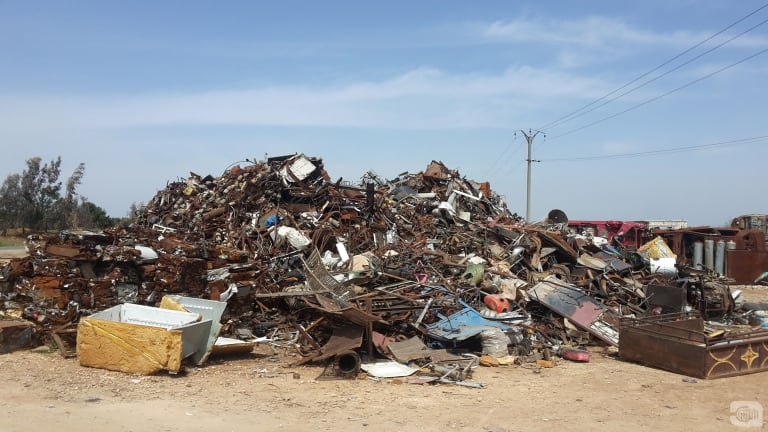
The war’s remnants have negative effects on the environment, in Idlib countryside, and the career of recycling played a positive role in cleaning up the environment.
Abu Omar has collecting and smelting waste center, he buys damaged metal, bottles, damaged aluminum windows, re-manufacture them, and then sell them as raw material, in the form of ingots, for anyone who wants to manufacture new tools out of them.
Ibrahim Douiri practices this career, and collect the wastes from villages and cities in Idlib countryside, that after he was a worker in one of the factories that stopped working.
"I was working for one of the private factories, and it stops working because of the war, I became unemployed, so I start practicing the profession of collecting and purchasing scrap and waste materials from the villages and towns and then sell them for scrap centers northern Idlib," says Douiri.
He confirms that the profession of scrap collection provides a good income for him and his family, and for many people who work in the same field, in the countryside of Idlib.

What about the damages?
Despite the benefits of recycling, but still it has some damages to the environment, in the absence of the oversight bodies and institutions competent in this issue.
Mohamed Al-Ismaeil, who works in the Studies Office of the provincial council of Maaret Noman in Idlib countryside, confirms that the biggest problem is the gaseous pollution caused by waste recycling factories which burn diesel fuel to be used for electric generators, laboratories, and which contains a high proportion of nuclear radiation that cause diseases such as cancer in addition to carbon monoxide, which reduces the proportion of oxygen in the air.
The engineer added: "the accumulation of solid waste in misplaced, is causing significant pollution and spread of insects, which cause diseases such as dermal sensitization, besides, the solid waste need to be landfilled each period and this is not happening due to the absence of control."
What about the workers who work in the waste recycling factories? Al-asmaeil answered: "anyone works in an atmosphere of gaseous pollution needs to a periodical measure to the amount of radiation that penetrates his body."
The recycling factories have benefits for recruiting people and other benefits for the environment and many harms too in the countryside of Idlib, but it considered to be one of the new professions that have offered jobs to the people and helped in removing waste from residential areas, while there is a real need for specialists to take care of these plants, and the health of their workers.
