


Reports | 25 05 2020
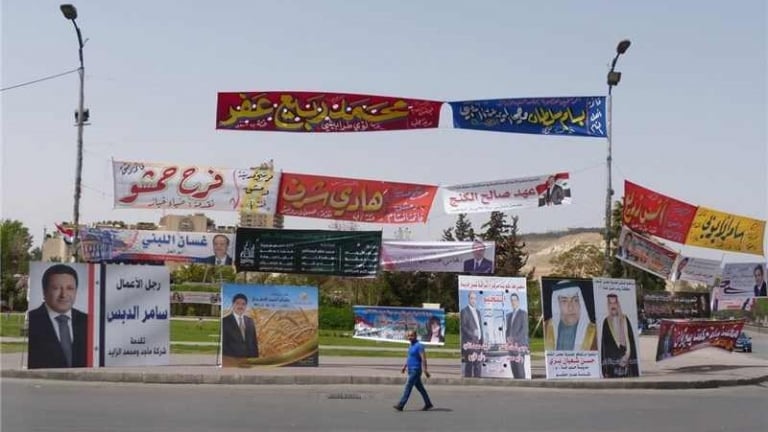
The streets in the Syrian capital, Damascus, are filled with thousands of pictures and campaign posters of the candidates for this year’s parliamentary elections.
Like in past elections, it is the same faces, and the same advertisements and promises, and whether they are for the regime or against it, most Syrians living in the country are fed up with the scene. Razana spoke with people to get their opinions about the elections.
A retired university professor told Rozana he had thought that the elections would be different this year, because they were taking place at the same time as the Geneva negotiations between the Syrian regime and the opposition. However, seeing the exact same kinds of political advertisements and the same corrupt people running again, made him lose hope.
Fancy Campaigns
According to what the supreme judicial committee for elections has announced, the total cost of all campaigns for 11,341 candidates is around 34 billion Syrian Pounds. However, in reality, the numbers are very different.
The deadline to file to run for elections was March 2, 2016. According to the judicial committee, the final number of candidates was 11,341. According to electoral act number 66 of the Syrian constitution, “fiscal spending on the election campaign of one candidate should not exceed 3 million Syrian Pounds.” Therefore, doing the math, the number of candidates, which is 11,341, times 3 million Syrian Pounds per candidate, results in 34 billion Syrian Pounds, which is precisely the amount that the judicial committee announced had been spent. However, this amount does not add up when considered in light of the high-end campaigns that are ubiquitous in Syria. Yousef Bateekha, an advertising campaign specialist, estimates that the cost of supplies, printing, marketing, and social media campaigns alone would reach two times the per per-candidate amount that was announced.
Homs has 1,800 candidates, followed by Aleppo, with 1,437 candidates, and Damascus, with 988 candidates, and the remaining candidates are spread throughout Syria. The capital, Damascus, has the most high-end campaigns of all— hardly a wall, street, or school is missing political advertisements or pictures of the candidates.
Adnan Dakhakhni, head of the Association for Consumer Protection, told the local “Al Watan” newspaper a few days ago that these high-end campaigns are taking place at a time when the income of Syrian people does not cover more than 10% of their expenses. Because the US dollar exchange rate has reached 500 Syrian Pounds, the average monthly income for Syrians is 25,000 Syrian Pounds, US $50, while a family needs a minimum of $350 per month to survive.
Running Again
Rozana compared the names of this year’s candidates to those from the last election cycle. The vast majority of candidates are current members in the parliament. They have collected money and taken advantage of their immunity, but they have given people nothing in exchange.
Looking at the names of from the last cycle, 80% of those running this year are running for a second term, and some for the third. The Syrian parliament contains 250 members, and Syria has had 17 election cycles, since 1971, under Assad the father as well as his son, Bahsar. Although the new 2012 Syrian constitution allows for a multi-party system, the Baath party has a strong presence in the current elections.
By contrast, candidacy requests submitted by people from the city of al-Zabadani were rejected. “People from al-Zabadani had their requests denied. This shows how the country is becoming democraric, accepting the other and their opinions!” said Muhammad al-Shamma’, Tadamun Party Secretary, registered in Rif Dimashq, on his Facebook page. Official Syrian media is covering the current elections, and presents them as a historic victory of the constitution. However, the official Syrian media also did not cover any of the violations—one of the current candidates in Aleppo is from the Barri family, which threatened shop owners in the Adonis neighborhood that they would be killed if they did not hang his pictures in their shops, for example.
State owned media also missed the fact that the current parliament members have not, in the last four years, held any corrupt official accountable, and when they finally held one person accountable, it was only the minister of electricity.
An Election Show
“People have no power in the people’s Assembly,” [my italics] and this is how Ghunwa, a university student, described the People’s Assembly. “I am 24 years old. I do not know any of the members of parliament, and I do not know whether any of them have been corrupted, or whether any of them has made one decision that improved other people’s lives,” she added.