


Reports | 25 05 2020
Unit Four, a military squad that follows the orders of the Syrian regime, took control of the port of Tartous by surprise, placing the unit’s officers in command of all port operations.
The Unit Four takeover dramatically changed how this trading port operates. Those workers who depend on the port for their livelihoods were harmed the most.
First Victim: Workers
Ibrahim spent 15 years of his life working at the port in Tartous. The port is his only source of income, and now devils control it. “They make it hard to enter and exit, claiming that the goal is to fight corruption. But what they do is make everyone’s life hell,” says Ibrahim.
The Soldier-controlled Port
On the 15th of last March, some officers and around 50 soldiers from Unit Four spread around the port, and took control of its essential functions, particularly those having anything to do with trade.
The members made an arrangement with port security and management. This has virtually turned the port into a military operation.
The leader of Unit Four, which follows orders from the government, is Maher al Assad. Maher al Assad is the brother of Bashar al Assad of Syria. Maher al Assad has officers that are loyal to him, and he has had them ever since he was a Lieutenant, when he forged Unit Four to do his will in Syria. His unit has fought many battles against the resistance, and bombed many cities, with a keen focus on Rif Dimashq (rural Damascus).
Complete Corruption?
According to Mr. Ammro, an engineer who lives in Tartous, the corruption has spread far and wide, from the port’s director, to some of its employees, and the customs officers. A huge network of connections and influence at the highest levels of the Syrian regime pull the strings over who gets any important position at the port.
Ammro adds, “the pace of work at the port flowed perfectly, until the arrival of Unit Four. After their arrival, Unit Four officers became the only ones to benefit from the port. They also began smuggling goods and selling them privately for individual profit.
Ammro confirms that Unit Four has introduced a new kind and new level of corruption at the port. It has transformed into a private company that pays no taxes, and payoffs have reached as high as 500,000 Syrian Pounds for a small shipping container of goods that passes through illegally.
Activities at the Port
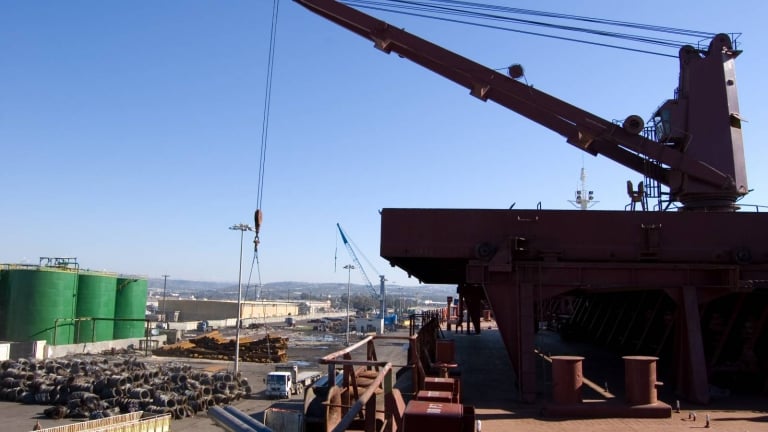
The port is a hub of activity for both military personal and civilians. Ever since their involvement in Syria, the Russians have been running extensive military activities at the port. No Syrian has any say in their military affairs.
When it comes to the workers at the port, Russians are also very involved—Russian soldiers transport their own construction vehicles and ammunition across the northern part of the port, almost every day.
The port has around 3,200 Syrian employees, and 500 of those are now registered in the Syrian army, and serve as reserve soldiers. Unit Four controls both the civilian and commercial parts of the port. While the unit has not yet fired any workers at the port, an employee at the port confirms, “the opportunity to work is at its lowest level ever, and most employees spend most of their time without work.”
And regarding the port’s civilian and commercial activity, Kamel, a port worker, says, “commercial activity has decreased ever since the beginning of the Syrian revolution. Fewer and fewer imports have been entering the port. At this point, it just feels like we’re at the empty edge of the world.”
The port’s current activity is less than 10% of what it used to be. One reason for this is the economic struggle that people face—most can simply not afford to buy very much. Another factor in the diminishing port activity is that imports are now primarily just the necessities of life, and even those necessities are imported in small amounts because of the tariff that is levied against all imports to Syria.
Mr. Kamel concluded by saying, “the Unit negatively affects the activity of the port. Additionally, the obstacles and bribes that traders and businessmen are subjected to makes commercial work in the port onerously complicated.”