


Reports | 25 05 2020
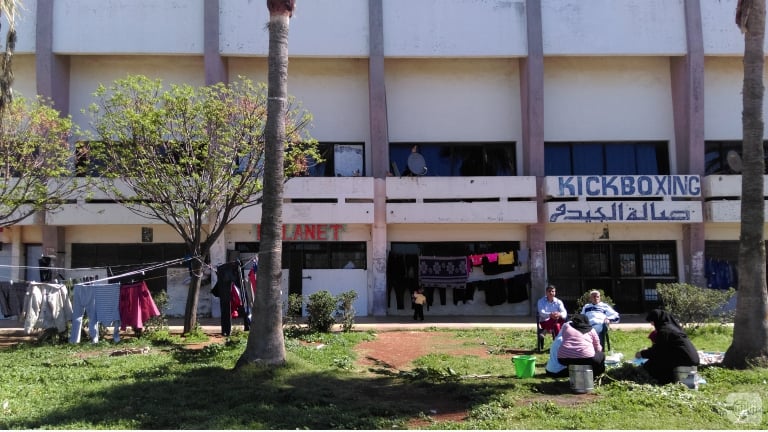
Some of the most impoverished displaced people in the world live on the grounds of the soccer stadium in Tartous, Syria. Many of them are handicapped people or widows, and these people were very poor, even before they were displaced.
The first floor of the soccer stadium in Tartous, where martial arts classes (Judo, Karate, and Taekwondo) used to be held, has been transformed into a shelter for the displaced from different areas in Syria. The place provides decent services, when compared to other shelters.
According to Sanaa, a mother of three who lives in Stadium shelter, each room in the new shelter can accommodate more than one family, and services like water and electricity are available. Sanaa points out that despite the decent living conditions, living in a shared space has its own problems, and that tension between neighbors is one common complaint that needs to be addressed.
“The situation here is hard,” she said. “I worked in a clothing shop for a little while. I cleaned the shop and organized the shelves. I could not work for more than two months. The salary was too small, and my children needed me,” she added.
Over time, the numbers of displaced residing in the shelter decreased. Those who stayed were the ones who did not have enough money to rent a house anywhere else.
Abu Muhammad, a 65-year-old man, was sitting in the park, waiting for lunch time. “My nephews were able to rent a house and find work. It was harder for me, because of my age. Sometimes, I find day labor,” he added.

What are they waiting for?
Those residing at the shelter do not know what is in waiting for them. Are they going to remain in the shelter for a long time? Will they return to their homes? Or will they end up as refugees in Europe?
"We are hoping that the situation will improve in Aleppo, so that we can go back to our house, if it is still standing,” one man said. “I do not want to think of anything. There cannot be anything worse than what we are going through right now,” said a woman from eastern, rural Aleppo, who has completely lost hope for returning home.
Who supports them?
Despite all the humanitarian aid that displaced people receive from the Syrian Red Crescent and other charities, the incendiary inflation puts a lot of pressure in them.
“We get the same amount of aid as those who have not lost their houses, or their jobs. In our situation, we need more than rice and blankets,” said Abu Muhammad, a displaced man living in the stadium.
Most of the humanitarian organizations provide food, money and clothing, but rarely do they pay attention to the psychological needs of these people.
“Humanitarian organizations should take into consideration how traumatized these people are. They have been doing this for years, and their circumstances continue to deteriorate,” said Rima, a volunteer in the psychological support team at the Red Crescent.
Although the Red Crescent has been providing some psychological support, the displaced people are in need of so much more, Rima suggests— new strategies, and more effective activities must be put in place, especially for women and children.

A Festival in the Hall
While the women living in the shelter gather herbs from the park to cook and eat, a conference to support and market Syrian industry, products was taking place on the other side of the stadium.
The same place had two faces. While some saw in the conference an opportunity to boost Syrian industry, and perhaps an opportunity to have some fun, others could not stop themselves from seeing the how surreal the situation was.
“Before thinking of how to support Syrian products, we should think of how to support the displaced Syrian people. A conference to support displaced people is a good idea, I believe,” said Riham, from Tartous.
Despite all the discounts that the conference offered, most of those residing in the stadium did not peruse the offerings and could not benefit from them: “we have no business here,” said some. By that, they meant that even if any of them had extra money, they prefer to keep it for emergencies. And on that note, one of the residents said, “we went and looked around a little bit. Most of the goods we saw are things that we have done without since we first migrated here. I bought two pairs of socks for the kids, then left.”

