


Reports | 25 05 2020
“I am afraid that we will be stuck here forever,” said Rashid, a Syrian refugee who crossed the Aegean Sea from Turkey to Greece to begin his journey through Europe.
Rashid is one of thousands of Syrian refugees who are stuck at the Idomeni border crossing on the Greek side of the Greek-Macedonian borders. This particular refugee crisis started on February 16, 2016, when many Balkan countries, like Hungary, The Czech Republic, Poland, and Slovakia closed their borders to refugees coming through Greece.
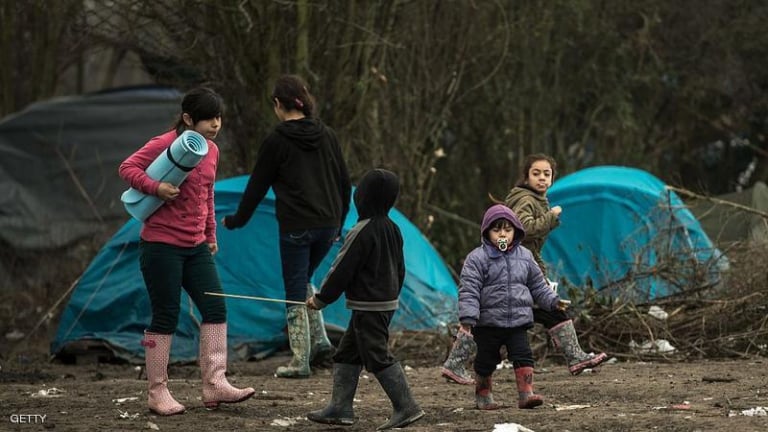
Rashid, who had left his country because of the war, managed to illegally get to Izmir in Turkey, and from there to the Greek islands in the Mediterranean. “There are more than 10,000 people here, and the number is rising daily. In this cold weather, children are sleeping under trees, and there are many people with critical health conditions,” Rashid told Rozana.
Rashid and many others are deeply concerned, because the rumor is that the officers at the Macedonian border crossing have been turning back every one with an official stamp of entry to Turkey or Lebanon. “I heard that they even search people’s cellphones at the checkpoint. As for me, I will stay in my tent and wait for my turn,” he added.

Greece Criticizes the Balkan Countries
Last Saturday, the Prime Minister of Greece, Alexis Tsipras, sharply criticized the Balkan countries for closing their borders to refugees. “These countries cannot close their borders after the EU Summit issued a different decision,” he said in a statement to the press.
Rozana spoke to Syrian refugees stuck at the Greek-Macedonian border.
“The situation is very bad, and is turning into a humanitarian disaster. It rained on us yesterday, so we were forced to move our tent to another place. Many people sleep in the open and are suffering from the severe cold. Children are crying nonstop,” said Suzan, who has been stuck at the border with her family for days. Suzan called on the humanitarian organizations and the European Union to intervene as soon as possible, and to find a solution for this crisis.

Europe Continues with its Promises
“If the current migratory pressures and the serious deficiencies in external border control were to persist beyond May 12, 2016, the Commission would need to present a proposal recommending to the Council a coherent EU approach to internal border controls, until the structural deficiencies are remedied,” the Commissioner for Migration, Home Affairs and Citizenship, Dimitris Avramopoulos told the German newspaperDie Welt last week.
Um Sham and her two little daughters arrived in Greece days ago, after a long and dangerous journey through the Mediterranean. Um Sham and her daughters do not have a tent to sleep in, and they have been sleeping under the trees in the Greek-Macedonian forest for days, which caused both of her daughters to fall ill. “I cannot walk well because of metallic implants in my feet. The weather here is very cold. The Macedonian authorities allow people to enter according to numbers they receive upon arrival, and there are thousands of people ahead of me,” she said.
The concerns of those stuck at the Greek side of the Greek-Macedonian borders continue to grow every day. Hoping to have their voices heard, many of them protest by carrying signs with simple words to demonstrate their daily miseries.
While the Macedonian government prevents people from crossing into its territories, the Greek government also bars those coming from relatively safe areas in Syria from crossing into other countries on its borders.
