


Reports | 25 05 2020
Many people have recently been talking about the spread of Swine Influenza (Swine Flu) in different parts of Syria, including Damascus, Homs and other cities.
Wael recovered from Swine Flu last week, after he was treated in the al-Bassel hospital in Tartus, Syria. “I was very close to death,” he said. “If I had not made it to the hospital on time and received the right treatment, I would have been dead now,” he added. Because of the rising number of Swine Flu cases, according to Wael, nobody is allowed into the al-Bassel hospital unless they are wearing face masks.
It seems that the disease has reached Latakia as well—the first death due to Swine Flu was a 26-year-old doctor named Tony Saba who worked at the Tishreen military hospital in Latakia. Saba’s friends questioned the medical and media reports claiming that the Swine Flu virus might cause death only in old people, children, and those with compromised immune systems. Further, they confirmed that Saba did not have any chronic diseases or immunodeficiency.
The Disease Spreads
Abu Jafar, who owned a dairy shop in Dahiyat Tishreen in Latakia, died last week at the National Hospital in Latakia.
The doctor who was overseeing his case said that the primary cause of Abu Jafar’s death was "viral pneumonia,” which is considered the disease’s most serious complication. However, the hospital administration tested all of his family members for the Swine Flu virus, and asked them not to publish the cause of their son’s death.
Despite the secrecy around the number of cases, many sources have confirmed that Swine Flu led to the death of at least one person in the city of Muhardeh in the Hama Governorate, and further that there had been more than 20 critical cases of Swine Flu in the city.
What makes the situation even more serious is the possible spread of the “Bird Flu" in the city of Qamishli, in northeastern Syria. Many people there are scared, especially after the death of one person at the National Hospital, and the news that many birds in South Qamishli’s bird farms had died.
Rozana’s correspondent in Qamishli spoke with Akhteen Asaad, a doctor in the city’s hospital, who said that six people had died in the hospital, though he did not specify whether the cause of their death was Bird Flu or pneumonia. According to the same doctor, up until this point, the hospital administration has not sent any samples to Damascus for laboratory testing and disease identification.
It seems that the Bird Flu has reached Tal Abiyad in northern Syria as well. Many sources said that there were 15 cases in the city, and our correspondent on the Turkish boarders, Ayman Bakkour, confirmed that two Syrians died from Swine Flu in the Turkish city of Urfa.
Symptoms
“The symptoms of Swine Flu are the same as those of the common flu, except that they are much more intense. The symptoms start with a high fever, from 39 to 40 degrees Celsius, accompanied by fatigue, body aches, cough, lack of appetite, and nausea. The symptoms soon intensify, causing difficulty in breathing, confusion, and, in some cases, pneumonia and severe heart and respiratory failure,” said Fatima, a laboratory physician working in Syria.
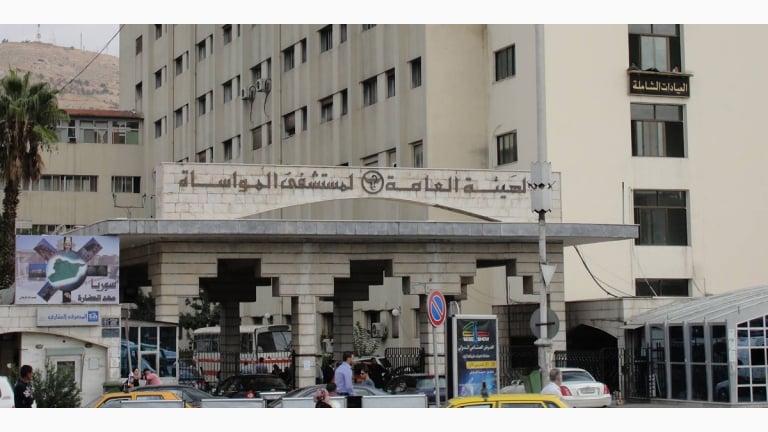
Fatima is shocked that the Syrian regime’s Health Directorates still force a state of secrecy around the issue, “even though laboratory tests have confirmed five cases in Assad Hospital, and six cases in the National Hospital in Lattakia, in addition to many cases in private hospitals.”
The Regime Admits the Numbers
The Syrian regime’s Ministry of Health and its directorates do not admit to how dangerous the Swine Flu is, and they keep insisting that the cases in Syria do not exceed normal numbers. However, last Monday, the state-owned Tishreen newspaper published an article about the spread of Swine Flu in Syria.
According to the newspaper’s sources, Swine Flu is suspected of causing six deaths in the city of Tartus as of last Sunday. Additionally, there are 25 people suspected to have the flu in the al-Bassel Hospital, of whom two are in critical condition. According the same article, there were nine cases in al-Qadmous, three in al-Sheik Badr in rural Tartous, one case in Dreikeesh, and one in Banyas. The newspaper attributed the high numbers of deaths and illnesses to the lack of specialized laboratories [treatment facilities?] in the province.
The newspaper even revealed that a high-level crisis management group was formed in the city of Tartus, which was charged with keeping the disease under control and distributing vaccines to all public hospitals in the relatively small city.
Exploiting People’s Fear
Ammar is a close observer of social networking sites and very interested in the "pandemic of influenza,” as he calls it. “Since the regime revealed this much information, it should be clear to us that the reality is much worse,” he said regarding the newspaper report.
Many people are too scared and they kept their children home from school, while others have considered leaving the country. “If the virus continues to spread at this rate, we will have to leave the country. What we hear from people is scary,” said Samia, a woman from Tartus.
In the middle of all of this, some are willing to exploit other people’s fear in order to make some extra money. According to Tawfiq, a pharmacist from Latakia, “many pharmacists use people's fear of the disease, selling scared customers seasonal flu vaccines for very high prices and claiming that they are vaccines for the Swine Flu, even though there is no specific vaccine for Swine flu.”