


Reports | 25 05 2020
Turkish origin goods still make a presence around Syrian markets—the communiqué by the Syrian regime government of last September, in which government sectors were prohibited from importing them; notwithstanding. These goods, coming into Syrian through the northern border, are abundantly available in regime controlled areas of the Syrian coast, supposedly a sworn enemy of Ankara!
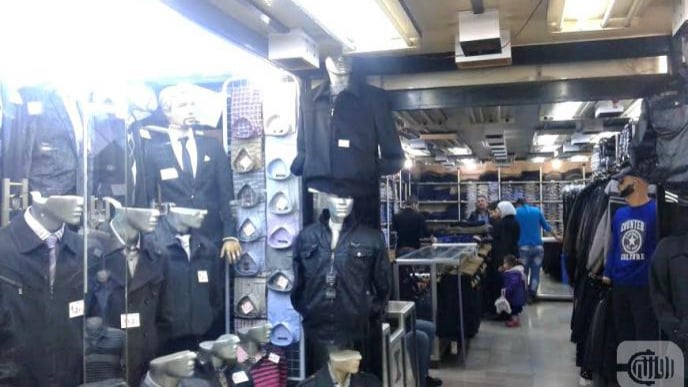
One will not need to resort a great deal of maneuvering to secure oneself one’s favorite brand of jeans, from a store dealing exclusively in Turkish goods in Lattakia; nor will one need some secret contacts, to buy some shoes or leather goods, for which Turkey is famous!
Buying Clandestinely!
The communiqué by the Syrian regime’s Council of Ministers of last September, in which government sectors were prohibited from importing Turkish origin goods notwithstanding; the private sector—in the guise of smugglers and contraband traders—consider themselves completely unconcerned therewith. This, despite the numerous civil campaigns—within the pro-regime public—calling for a boycott of Turkish goods; as they perceive Ankara as having played a role in the "cosmic conspiracy,” which they claim targets the Syrian economy.
"I personally know many of these campaigners who themselves buy Turkish goods clandestinely, through their friends,” says Munir, shop owner in one of the famed smuggled goods markets in Lattakia; whose clandestine trade thrives, despite all boycott resolutions.
Munir additionally confirms that many holier-than-thou campaigners and enfants dorés—particularly the children of powerful regime bosses, and parliament members, are some of his regular customers. He says that they travel to Beirut to shop, if they do not find their desire from among what is available on display in his store.
To Each its Own!
Munir, the solid Syrian regime supporter, sees no harm in his continued trade in Turkish goods; despite his store window being brim full with Chinese goods—a ‘camouflage’ as he puts it.
Munir believes the Syrian economy to be on its last legs; its inevitable collapse will neither be be brought about by his trade, nor will it be stopped by his desisting therefrom. It his is only source of income. His brother Ziad—clothing store owner in the staunchly pro-regime Zira’a neighborhood—concurs.
Despite the absolute loyalty of the neighborhood to the regime, its populace were unable to bring themselves to adapt to inferior-quality locally-made goods. Turkish goods have become an outlet that Ziad sees neither as luxury nor as lavishness—but a necessity; despite its high prices, and the many bribes paid store owners are forced to pay, to secure safe passage thereof.
Shameless Shopping!
Many regime supporters find nothing awkward in openly acknowledging donning Turkish fashion; nor do they pay any attention to criticism harping on their loyalty to the regime.
29-year-old Bilal is one of those, who confirms to not being at all ashamed to tell his friends that his newest winter clothes are Turkish-made. He would not tell them where he bought them from, though, in order not to harm the store owner, who is his dearest friend.
Bilal speaks about frequently meeting other friends wearing clothing that he knows are of Turkish origin; but he opts not to confront them with it, so as not to embarrass them.
Says he: “Given that the goods shipments stealthily pass through the Kassab border crossing [with Turkey], with a great portion thereof finding its way to Qurdaha [Bashar al-Assad’s home town], for distribution; one must logically deduct that big names are implicated in this trade, and have a vested interest in its continued flow. They merely mock the meek and simpletons with empty slogans.”
The young man adds: "We presently are in a state of war. Industry in our areas has been devastated, and we are exposed to huge pressures—the most painful of which is the economic blockade that has exhausted all of us. So, let us not add yet another burden, by living in la-la land, all in the pretext of supporting a non-existent national economy.”
A “Like” on Facebook Does Not Mean Boycott!
Girls have a different tale with Turkish goods; particularly that their designs attempt to emulate international fashions—especially when it comes to make-up and clothes.
"Iran's credit line has not been negligent in securing market requirements; but daily requirements are not exclusively limited to food; we as girls have many other needs,” says 23-year old Reem.
The girl adds: "We wish to enjoy our lives, despite the rigors of the circumstances in which we live. I do not deny on Facebook “Liking” pages and posts that call for a boycott of these goods; but I cannot resist their appeal and stop buying them—especially when I find nothing else that satisfies me on the market."