


Reports | 25 05 2020
By: Mohammad Habash
November 25 was declared the International Day for the Elimination of Violence against Women. The event is linked to the anniversary of the execution—by Dominican dictator Rafael Trujillo in 1960—of the political activist sisters Mirabal. The United Nations [UN] instituted this international day of commemoration as per a 1999 UN General Assembly resolution of the General Assembly.
That, of course, was prior to the onset of the tragic Syrian diaspora, and its attendant calamities, horrors, and ravages; of which women bore the largest brunt of ardour, suffering, and oppression. Not to mention trading in women's image on international media channels; voraciously regurgitating the image of woman as a vagabond, crying, hungry, raped—a stricken and bereaved widow.
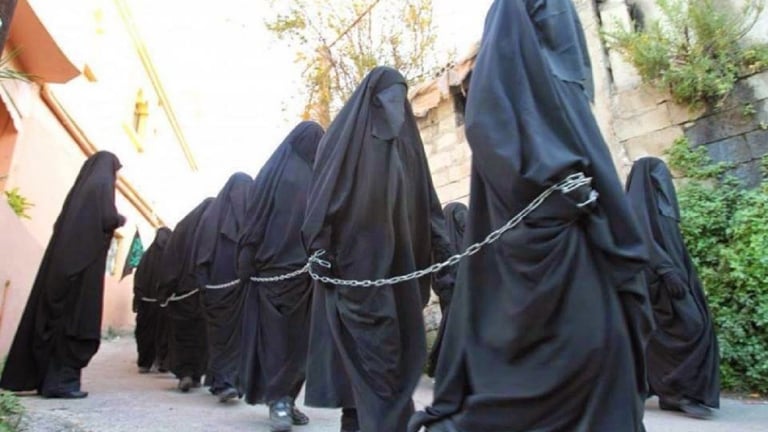
All these grievances do not compare to the single most tragic scourge befalling women in this day and age—that of serfdom; a practice Daesh has brazenly committed in broad daylight against the women of Sinjar. As I write these lines, there are thousands of Syrian and Iraqi women still being subjected to the cruellest practices at the hands of ruthless warriors completely devoid of any iota of mercy. They “share” their women's bodies, in a deviant sadistic black barbarism, that represents the worst forms of human cruelty and obscurantism. Worse still: These acts are committed under the ostensible guise of applying God’s divine law!
Daesh has proclaimed its application of God’s rule in the captivity of “apostate” women—raising unanimous Islamic denunciation. I do not think that a single Islamic platform, university, higher or lower council Islamic has failed to condemn this despicable act of slavery forced upon the women of Sinjar. There have even been statements of condemnation substantiated with religious evidence based on Islamic jurisprudence, issued by almost all Islamic fatwa [religious edict] centers the world over, condemning Daesh and confirming its deviancy and aberrance.
These fatwas, however, whether issued by the Al-Azhar sheikhs or fatwa councils; do not exceed mere press statements. They have not evolved into a true systematic reform of the education programs. Clerics rather immediately relapsed to teaching the culture of women’s serfdom and captivity as being part-and-parcel of the current curricula; as the “appropriate” way of dealing with women in war; as a continuation of the salaf al-saleh [the rightly-guided ancestors’] way. This is still considered [by these clerics] as an axiom of justice in times of war; that women are the mulk al-yameen [right of possession] which the Qur'an has made a great blessing from God to believers—male and female. Neither can I forget how we were taught in our [university] study about female serfdom and captivity and its “wisdom;” how this form of slavery supposedly helped women escape the risk of homelessness and humiliation following a war; and—more incredibly—how it helped them meet their “innate” physical urges in a fair and wise manner!
Our curricula still overflow to date with the news of captive women in the age of [the Prophet’s] companions and followers. We still wax poetic on the stories of women slaves and captives in the annals of Arabic literature; while remaining blithely oblivious to the suffering and weariness under this black oppression in hell—forced upon them by war. They become nothing more than goods, mere commodities in the slave market, separated from their families and children. We equally fail to notice their tears of oppression and sorrow, or the suffering that surrounds their dismal lives, replete with repeated grievances; instead we choose to offer scenes of playful, perky, seductive slave girls—even as erudite, brilliant, and talented poets and dancers. But not a single mention of the barbarity of captivity and slavery, practiced by sadistic criminals, who know not a single modicum of dignity a human spirit deserves—in life, as well as in God’s own spirit in man.
To date, I still cannot fathom how I am to bring myself to believe this. I do not know how it had been possible for my teacher to tell me lies about how merciful the [religious] legislator had been towards women, when providing them with opportunities for a “dignified” captivity; how merciful our ancestors had been when they slaughtered a woman's tribe—killing father, brother, and child, then showing their munificent pity on the afflicted women, thrusting them into captivity as slave girls to warriors; and how this was an act of kindness and favor bestowed onto these hapless women!
* Opinion pieces do not necessarily express the views of Rozana Media.