


Reports | 25 05 2020
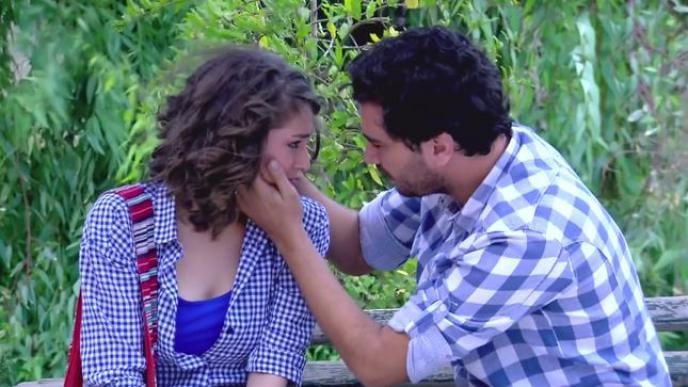
The Ramadan Drama Series "Sarkhet Rouh" [A Soul's Cry] tells tales of marital infidelities and family stories in Syrian society. It has received as much high viewership numbers, as criticism.
No two can disagree on the daring nature of the sexual innuendos of quintets' series "Sarkhet Rouh," with views differing in its regard. These range from complaining about the "silliness and decadence" employed in depicting intimate scenes; to lauding the depiction of the reality of infidelity, as the least of the illicit relations experienced by Syrians. The series probably accompanies all other anomalies prevailing throughout Syrian society during the current crisis.
"This a series fit for a honeymoon, not the month of Ramadan," says college student Rawad. He continues: "With the degradation in raising the issue of sex in this miniseries, next year you may require decryption to follow it!"
A person with a Facebook account called "Ramei Hasan" claimed on her page that this series "is a cry of prostitution," noting that such serials encourage deviant behvaior, all while its producers claim to address the crisis and merely transmitting reality.
While "Samar Sammoura" says, "We need to support and trust one another, not to devote the concept of infidelity, and turn it into an obsession that controls all segments of our society."
Each part of Sarkhet Rouh consists of six quintets, currently presents in its third part. It depicts sexual infidelity among friends and co-workers—even between brothers and relatives.
Social networking sites, particularly Facebook, were filled with cynical posts mocking the series. One post listed the actors, based on the number of infidelity roles ; they played in the series; while another page offered a video comparing Sarkhet Rouh's stars to Porn stars.
On the other side; Mohammad Khlli says "Great and realisitic series. There is nothing wrong with it being bold, because what is actually happening in our society, is even worse."
Sawsan Salim believes, that "The series' events and stories realistic, they happen and not everyone knows them... There may have been some exaggerations, but they help shed a light on certain issues and their solutions... This series shows people how ugly infidelity is."
Jalal Nassa indicates that the series is "100% realistic," adding, "It is only normal to find people who hate it... No one can achieve everyone's consensus—especially a series that is bold, and that proposes strong issues... I find the series successful."
First Row Actors!
The artists involved in this series are some of Syria's first row actors, led by Bassam Kousa, Abbas Nouri, Abdel Mounem Amayri, and Milad Youssef; as well as Yazan al-Sayyed, Jenny Esber, Rana Abyad, and Madiha Kneifaty. Critics however contend that the series revolves around one unique axis—sex—which all characters seem to obssess about day and night; and that all social models depicted do not hesitate to commit infidelity.
Remarkably, the series ranked fourth rank in viewership among other soap operas presented in Ramadan last year. Mohammed, a journalist, comments that "it is natural for the viewership of any series to be high if it depends up raising the issue of sex in this manner—particularly in our Arab societies; and without any regard for the dramatic and moral value thereof.
Nadia al-Ahmar, a co-writer of Sarkhet Rouh, recently said: "We se sex as a purely human condition, not exclusive to Syrian society, but also to all Arab and other societies; and one not addressed in drama from all its possible angles. We therefore cnsider that we offer a critical dramatic testament of these cases, and predict their disastrous outcome to society, and leave final judgment to the viewer."
Syrian drama has mostly during the past years—especially with the absence of its main stars—resorted to vulgarity, absurdity, and escapism sometimes according to critics. And while many contemporary drama series showcase reality in a light and tone favoring the Syrian regime; opposition-controlled areas as well as other regions of Syrian exodus, are witnessing the emergence of new dramatic experiments that may impose themselves in the coming period.