


Reports | 25 05 2020
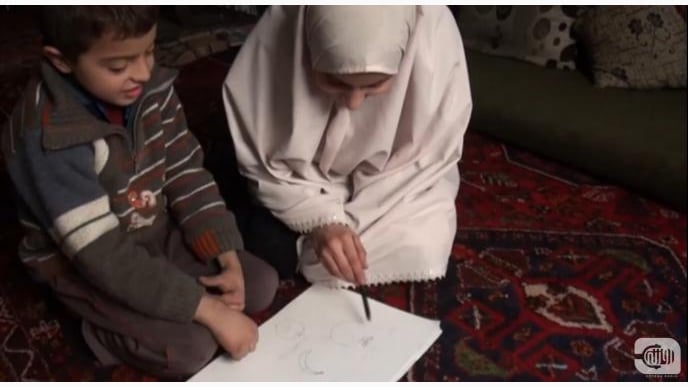
"Our children do not know anything about life; they even only know about fruits through painting." This is how Safiyah, a resident of the beseiged Eastern Ghouta [in the outskirts of Damascus] describes the lives of her children, who "grew up to the noise of aircraft, and saw nothing but destroyed houses."
Food is far from being the only thing the children barely recognize. According to activist Sufian al-Shami, "the new generation of Ghouta's children have been kept apart from all normal means of living such as electricity, water, and other such simple things."
Al-Shami indicates that households in Ghouta are attempting to compensate their children for the lack of some items by other available and cheap alternatives; in addition to telling them stories about the forms, flavours, and colours of fruit.
The activist asks with exasperation: "But what of the rest of what is missing, such as electricity; how do you explain that to them? They are currently living in the stone ages; even farther back, they are deprived of the most basic living conditions."

From Rooftops into Fields!
The residents of Ghouta started converting their rooftops and home gardens into impromptu fields, in which they cultivate their vegetables with whatever seeds that are available to them; and which they water from the wells they have dug to secure their needs.
Al-Shami justifies residents' adoption of such method, by the high costs and the scarcity of vegetables most of the time. One kilo of chard, for example, costs 300 [Syrian] pounds on the market; whereas it would cost a family only 100 pounds, if cultivated in a home garden.
Shami says that the Eastern Ghouta is well known for being one of the richest areas planted with vegetables and fruits in Syria. But the continued shelling thereof by the regime and the resulting exodus of farmers, has reduced crops to minimal levels.
He also points out that fruits that are still grown in some territories, including apricots. Residents have been turning it into food and winter provisions; they dry it and turn it into a jam or Kamaruddin [traditional Syrian apricot-based thick solid jelly sheets].

Sugar: Four Thousand [Syrian] Pounds!
The majority of Ghouta's population are day laborers. The average family income is circa 15 thousand Pounds a month; a paltry amount, especially given that food prices have increased more than tenfold, according to activist al-Shami; who also indicates that prices may vary on a daily basis, depending on availability.
One kilo of flour has jumped to 1,000 Syrian Pounds; a kilo of sugar to 4 thousand Pounds; rice to 2,000 Pounds, and; a bundle of bread to 450 Pounds. Fruits, on the other hand, are quite rare and sold by unit—if at all available. For example, the price of one single banana, if found, can reach as high as 500 Pounds, while a kilo of oranges can fetch up to 650 Pounds; not to mention all other food items that simply ceased to exist.