


Reports | 25 05 2020
Despite never having lived in a conflict zone, Rami still wanted to recieve a "Displaced" status from of the Red Crescent center in Tartous. Having had his application rejected earlier due to not fulfilling the criteria for a displaced person; this time, he came back escorted by a member of the [regime] security forces.
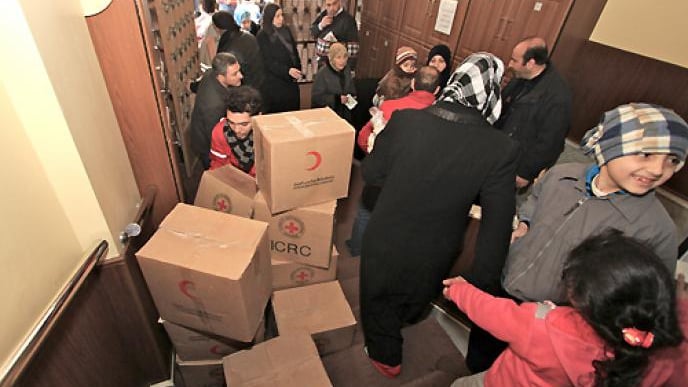
Rami works only two days a week in Damascus, to spend the rest of his week in his original town of residence, Tartous. A member of staff at the Red Crescent center tells Rozana, that a person requesting a "Displaced" person status must provide documented proof of residence in the area where armed clashes took place; proof such as telephone or electricity bills, or a police report proving his house was demolished or damaged. He adds that "this person [Rami] wants, through nepotism, to take the rightful allocation of others. This is why he brought this security man along to terrorize us. His efforts were successful, as he was admitted to the displaced people list. He left with a relief basket that other people actually deserve."
The Tartous Red Crescent
The Tartous Council allocates shares of the Red Crescent relief baskets for the offices of the Baath Party and distributes them to the families of the regime's dead system—whether city residents or displaced. These quotas neither pass through the Red Crescent's warehouses, nor are they entered into official records. Many of them may even not reach the families of the deceased, says a Crescent volunteer.
A family member of one of the regime army's fallen fighters complains that "martyrdom for the fatherland is filtered. There are two tiers, lucky ones and unlucky ones." As he puts it, some families receive monthly aid, while others receive it only once.
The Al-Suqaylabiyah Crescent: Shed No Light Over the Displaced!
The United Nations decided, last October, to cut food aid to some 4.2 million displaced people inside Syria by 40% due to lack of funding. This would impact the volume of food baskets distributed by the Syrian Red Crescent to the displaced.
The number of beneficiary families from the Red Crescent in the city of Masyaf is circa eight thousand families, half of them Alawites returning from major cities to their villages. The city's share of Red Crescent allocations reached four thousand relief baskets per month; a family may recieve a basket once every two months, while in Al-Suqaylabiyah families' share of relief baskets is even less than that of Masyaf and Tartous.
Elias, a displaced person from Aleppo to Al-Suqaylabiyah says: "There are political motives behind the distribution of [relief] quotas. In addition to being the port where aid ships are received from the sea, it is also one of the regime strongholds. And those quotas are considered bribes offered to regime loyalists."
One Red Crescent worker in Al-Suqaylabiyah, on the other hand, sees that the number of displaced people in Tartous far exceeds those in his hometown. It is, therefore, only natural that the Tartous share of food baskets is larger.
In all cases, the Red Crescent allocations do address some needs. Abu Abdo, the Aleppan displaced to Masyaf, says: "After failing to find any lasting work to help me keep my three kids free from need and want, I can say that the Red Crescent [relief] basket saves us from hunger. From hunger only."