


Reports | 25 05 2020
By Ali Safar
Critiquing the revolution matters more, and is of more value, than blindly supporting it or putting it on a pedestal. This is more important as, after four years of delving deep into the Syrian abyss with all its intricate details and nuances, we still stand at a rather basic, even naïve, threshold; a threshold to which we are dragged by what seems to be a chronic misunderstanding on the one hand, and by misconduct grounded in the everyday reality on the other.
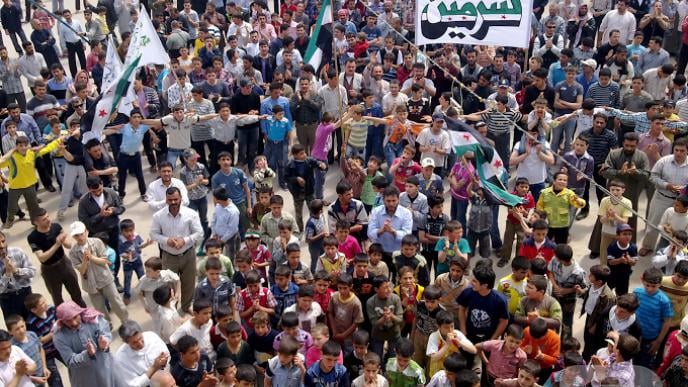
Each mutual discussion on this point or that is daily revealing the widening chasm existing between Syrians. An entire generation has come of age in the shadow of the revolution, and is coming into the public arena alongside other generation preceding it. This young generation which opened its eyes to the world around it in March 2011 with the onset of the Revolution, needs to be engaged in the discussion. It witnessed and participated the early genesis of peaceful mobilization; it watched the metamorphosis thereof into an armed struggle; up to the present moment of chaos and schisms. It has reached full maturity and realizes the reality as it is on the ground. This generation now possesses the audacity to take a stand, defend it, and even die for it.
This young teenager is the lesser threshold we face when we discuss and debate the reality of the revolution. We would only have to imagine the explosive impulses of other generations of youth, who were inclined to suppress the Islamic currents they are influenced by. They can now declare their allegiances freely, to vigorously enter the debate and defend what see as their burden of historical injustice done to them. We will reach the conclusion that this type of youth has their own revolution—the Islamic revolution. The same can be said of the youth from the leftist and nationalist currents.
Reprisal of these facts is confirmation that all of us, actually, do not share one revolution: we each have our own revolution. This stands true; the attempt to plow through the rhetoric of each current revolutionary faction for the initial, noble slogans of freedom, dignity, and justice, in search of common linkages based on the principles everyone says they believe in; notwithstanding.
The disintegration of the revolutionary “shield” among Syrians, did not come as a result of the military and media prowess of the regime or its strikes. We may actually be able to say that these strikes are less significant to cause this reality. On the contrary, everyone is well aware that confrontation with the regime should unite revolutionary forces. Yet the disintegration has taken—and is continuing to take—place daily with the ascendancy of regional and sectarian tendencies, growing dependence on external backers, and the control of specific powers on the overall political movement of the Syrian opposition. Compounding this disintegration is the reproduction, on the side of regime opponents in decision-taking capacities, of the regime’s “mindset.” This cuts out pan-revolutionary forces from active participation in the exercise of free and open political and intellectual debate.
Many Syrians who have opted to follow the path of the revolution, within the current reality of revolutionary forces actively involved in a form of intellectual coercion, dare not ask themselves: Is this our revolution? Despite the fact that, reading the facts on the ground, will lead to a "yes, this is our revolution” answer; the question, however, remains—even if withheld and muted. Analysis of the answer, will necessitate a reconstruction of a well established fact of Syrian life during the past fifty years—a coercive accrual that has led and will continue to lead to the present outcome. Reference to this accrual, however, does not mean in any way, silent submittal thereto. It should, rather, offer the common basis upon which to think, and a common space to lay pillars around which dialogue between Syrians—each deeply ensconced in their own respective national, religious, and intellectual trench, can be conducted.
Some may see in such debate and criticism an attack on the revolution; yet the context of events will inevitably prove such view is actually in defense of this person’s own revolution—not the revolution, around which Syrians have rallied. The natural progression of such logic, will also demonstrate that whoever is defending their own—rather than the Syrian—revolution will end up speaking of his own country, not a country for Syrians!
And so on, and so forth…