


Reports | 11 10 2026
 Marina Mansour
When a phrase taken out of a video clip becomes a tool for fueling sectarian rhetoric, the digital space is no longer simply a place for exchanging opinions. It becomes an extension of tensions and divisions within society.
In response, young Syrians are trying to learn different ways to address hate, from turning to the law to building networks of solidarity. Meanwhile, civil society initiatives are seeking to create spaces for dialogue between individuals and groups who may be separated by stereotypes and a lack of trust.
But peacebuilding in Syria is not limited to countering hate speech or organizing activities that bring people together. It also depends on whether initiatives can reach communities exhausted by difficult living conditions, build trust with them, and secure the resources needed to continue their work. These efforts are also taking place amid questions about the room available for civil society to operate during the transitional period.
From Damascus to Latakia, the experiences of these initiatives share a common goal: turning the desire for change into a daily practice that allows young people to help address social tensions rather than simply be affected by them.
From Dialogue to Countering Hate
The "Peace Circuit" Foundation in Damascus uses technology to support peacebuilding by developing platforms that allow people to express their views and tools that encourage positive social responses.
Rana Al-Sheikh Ali, Chair of the Foundation's Board of Trustees, explains that its work has expanded to include building a network that connects women, allowing them to exchange experiences, learn from different perspectives, and develop solutions that respond to the needs of their communities.
According to Rana, the Foundation's approach is based on three complementary tracks.
The first, "Knowledge for Peace," aims to raise awareness through research, knowledge sharing, and networking among individuals and communities.
The second, "Narratives for Justice and Recovery," focuses on how communities that have experienced violence can seek the truth and break the cycle of violence.
The third involves using technology as a tool to empower local communities, particularly young people and women, to develop responses and solutions to the problems they face. The aim is to strengthen their ability to use technology to create an imoact rather than remain passive recipients of its effects.
Rana stresses that the Foundation's work and initiatives are guided by feminist principles. She notes that its leadership team is made up largely of young people between the ages of 20 and 30.
In Latakia, Julie Zwan, who is in her twenties, is driven by a different motivation: a desire to understand and analyze the factors that influence conflicts through her involvement in peacebuilding initiatives.
Julie does not believe these initiatives can, on their own, bring about peace in the full sense of the word. However, she believes they can create spaces where people meet, talk, communicate, and learn about one another's backgrounds, away from common stereotypes.
"I don't want to look back at myself ten years from now and realize that I could have done something to change society but didn't," she says.
She adds that seeing people try to take part, interact, and get to know others encourages her to continue her work.
However, creating space for dialogue does not necessarily mean overcoming disagreements or rebuilding trust. In addition to bringing people together, this requires the ability to address the causes of tension, reach those who are more reluctant to participate, and make these meetings part of ongoing community work.
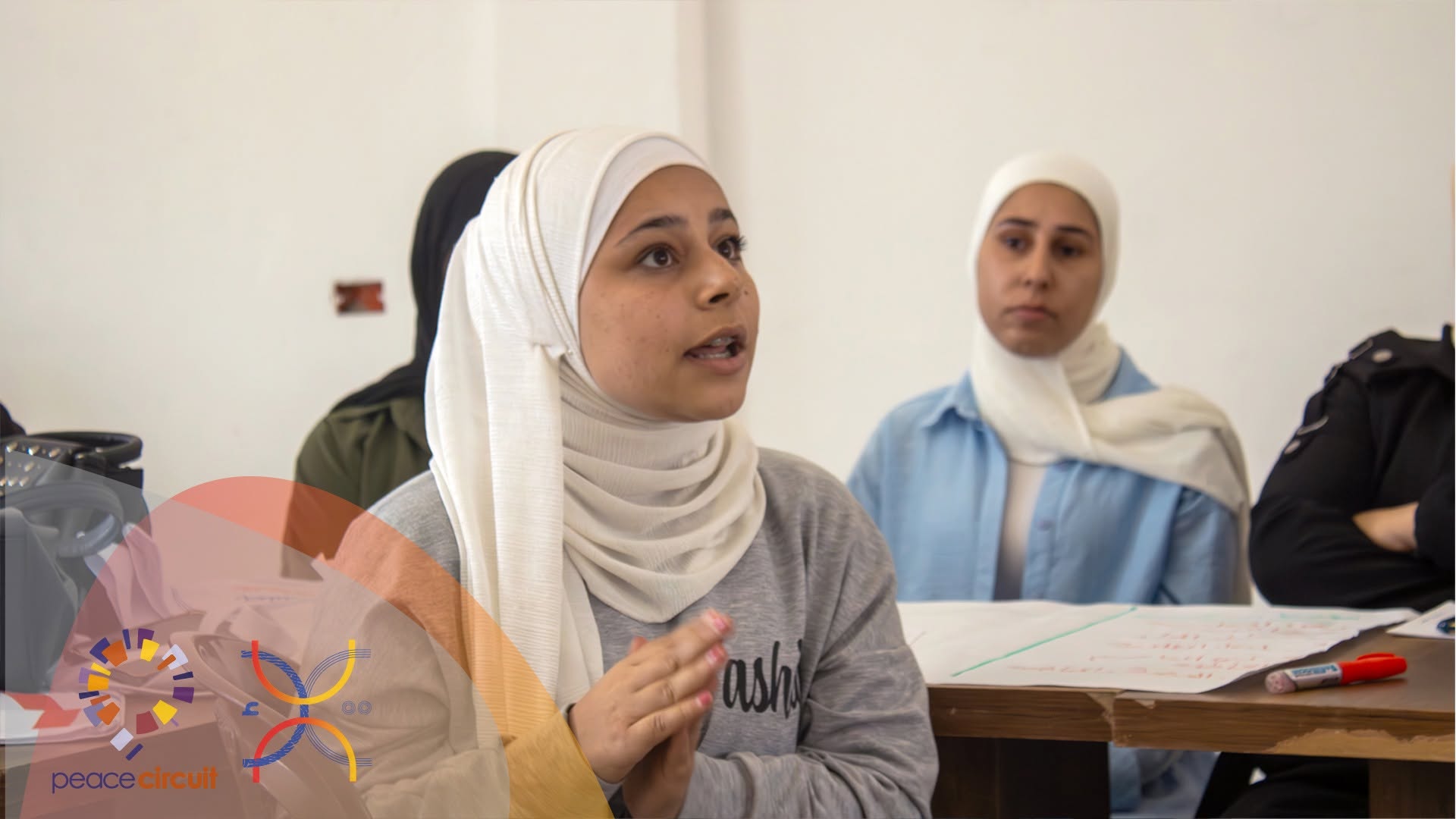
From a youth training program at the Dareat Salam Foundation
When the Digital Space Fuels Divisions
The violence that took place along Syria's coast in March 2025 highlighted some of the risks associated with the spread of misinformation and hate speech during periods of tension.
On 11 March 2025, during a briefing on the violence along the coast, the United Nations Human Rights Office warned of a rise in hate speech both online and offline, as well as the spread of misinformation, including video clips taken out of context. It noted that these developments had fueled tension and fear among residents and threatened social cohesion.
These risks are particularly important in a context where civil society initiatives are seeking to promote dialogue within communities, while misleading content can reinforce stereotypes and deepen divisions.
Rana Al-Sheikh Ali sees hate speech as a global challenge that has grown with advances in technology and the spread of social media. She explains that algorithms and the attention economy, which is based on competing to attract users' attention and increase their engagement, influence the type of content that spreads across digital platforms.
She points out that limited ownership and control of technology pose challenges in the Arab world and in countries affected by conflict. Companies that own digital platforms seek to generate profits, limiting communities' ability to influence how content is distributed.
In response, Peace Circuit works to improve digital media literacy, raise awareness of rights and responsibilities in the digital space, and advocate for the development of laws that protect these rights.
This work includes teaching people how to avoid engaging in hate speech and explaining the options available to them when they encounter it. The aim is to help them use technology and participate in the digital space safely and responsibly.
The Foundation also works to address technology-facilitated violence: violence carried out using digital tools or violence that begins offline and then extends into the online space. Rana describes this as one of the challenges facing groups at greater risk of violence, including women, children, and people living below the poverty line.
"We work to use technology to address technology-facilitated violence and incorporate psychological and legal support," she says.
According to Rana, the challenge is not limited to responding to violations after they occur. It also includes preventing them, particularly among children. She believes that the lack of specialized digital citizenship curricula across different levels of education is a problem in Syria and the Arab world. Children need to learn how to navigate the digital space, express themselves, and protect themselves from online risks.
"We are trying to develop a training curriculum at the Foundation and train teaching staff so they can guide children," she adds.
Rana also highlights the need to strengthen the protection of digital rights under Syrian law to ensure a safe digital environment and protect personal data from leaks or misuse, including by the state. She believes this requires clear legal provisions defining violations and possible penalties, as well as constitutional protection for these rights.
However, despite its importance, digital awareness alone cannot resolve the question of whether initiatives can influence society. Reaching the people who need these spaces and convincing them to participate remain major challenges for peacebuilding efforts.
Poverty and Low Trust: Barriers to Participation
Julie Zwan believes that peacebuilding and hate speech initiatives do not always reach people who are wary of other groups, limiting their ability to open channels of dialogue between them.
She points out that the trust gap between local communities and civil society organizations is also linked to differences in priorities. Many people are more concerned with meeting their economic and basic living needs than with taking part in peacebuilding activities.
This creates a practical question for initiatives: How can people be asked to devote time and effort to civil society work when the demands of daily life already place them under considerable pressure?
The question becomes even more important as poverty continues to affect large parts of Syria. In a report published in February 2025, the United Nations Development Programme estimated that 90 percent of the population was living below the poverty line in 2024, while the extreme poverty rate stood at around 66 percent.
In this context, Julie believes that civil society workers are responsible for choosing approaches that bring people together around shared concerns and take their priorities into account, rather than assuming that participation in peacebuilding initiatives holds the same importance in everyone's life.
The issue is not simply about reaching an audience. It is also about building a relationship that allows people to participate. Initiatives seeking to change ways of thinking or challenge stereotypes need to establish trust. This cannot be achieved simply by launching activities; it requires ongoing communication and the ability to respond to community needs.
These challenges overlap with other difficulties faced by young people themselves, including limited funding and a lack of opportunities in civil society work. As a result, sustaining participation requires more than individual enthusiasm.
From Reaction to Understanding Legal Options
The experience of Ghazal Mustafa, one of the young women who took part in digital citizenship training under the "Basma-tech" project, offers an example of how awareness can move beyond general knowledge and help someone deal with a personal situation.
Ghazal tells Rozana that the training changed how she responds to hate speech. Interactions with trainers and other participants, along with opportunities to discuss issues and express opinions, broadened her perspective and helped her develop a more comprehensive understanding of the issue, particularly because she had repeatedly been exposed to hate speech.
She recalls an incident in which she was attacked on social media after a sentence from a video she had posted was taken out of context and turned into sectarian rhetoric, triggering a campaign against her.
"After I contacted the Peace Circuit team, a lawyer helped me understand what to do, such as taking a screenshot and going to court to file a formal complaint. This changed the way I dealt with the situation. Instead of threatening the person responsible or confronting them in the same way, I turned to the law," she says.
Her experience shows how training can introduce participants to options they may not have known about and help them move from an immediate reaction to considering different ways of responding to a violation.
Ghazal adds that she and other trainees launched a challenge encouraging people to report posts that violate general standards. They also encouraged people around them to take part, with the aim of promoting digital citizenship.
However, this experience does not mean that training alone can put an end to hate speech. Rather, it highlights the importance of giving people the knowledge and tools they need to deal with it and expanding their ability to respond in different ways.
Rana Al-Sheikh Ali says the Foundation has also observed changes in how some young people involved in its projects respond to hate speech. Instead of responding in kind, they have begun turning to options such as filing complaints with the cybercrime department, building networks of solidarity, and providing information to counter misleading narratives.
These options also include seeking psychological and legal support and contacting cybersecurity specialists and the companies responsible for digital platforms to request the removal of hateful content.
Such responses combine legal, psychological, community-based, and technical approaches. However, their effectiveness still depends on whether people know what options are available, can reach the relevant authorities, and are able to access their services.
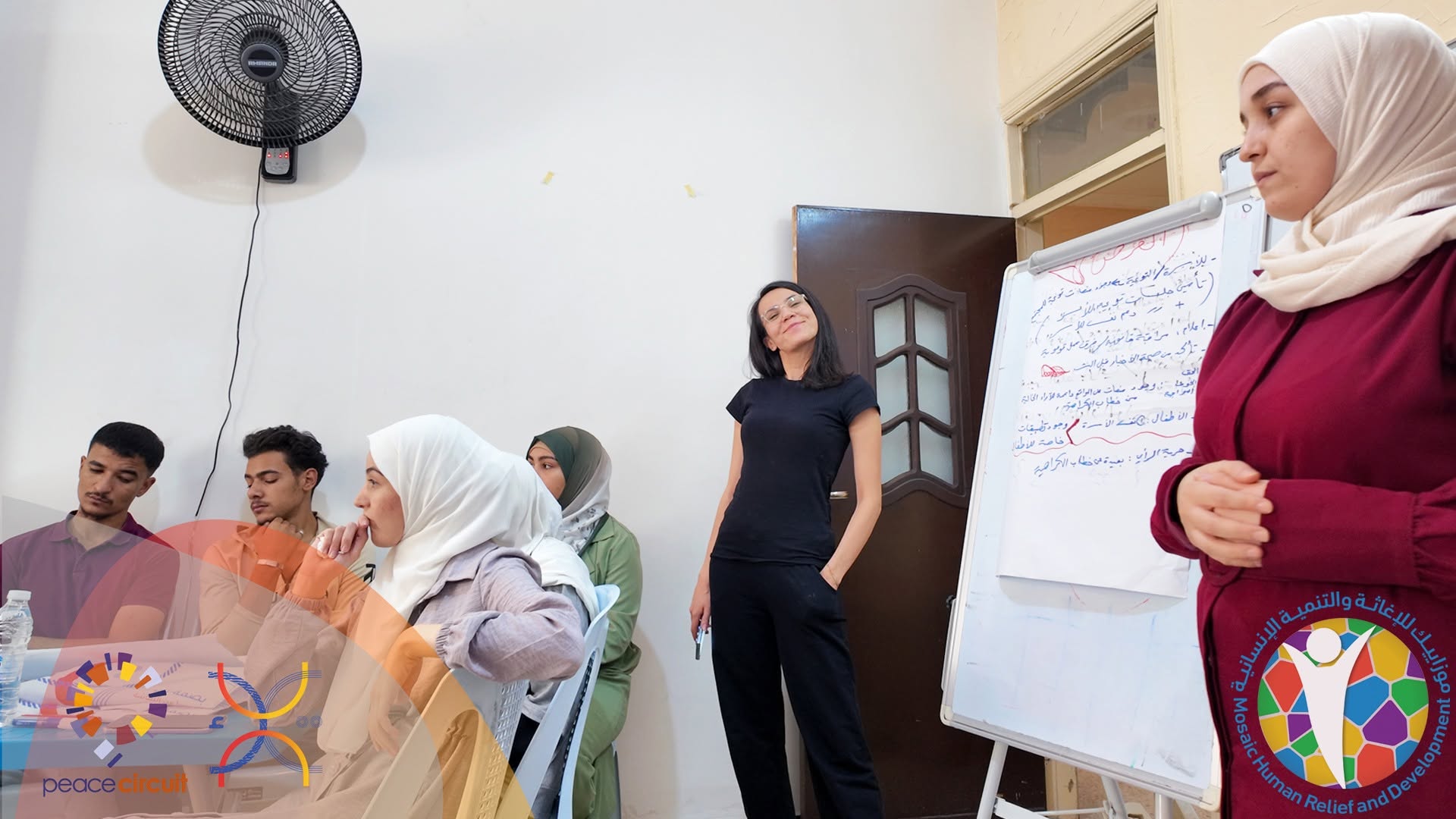
From a youth training program at the Dareat Salam Foundation
Funding and Civil Society Independence
The difficulties facing these initiatives go beyond the challenges of reaching communities and building trust. They also affect their ability to continue operating in a changing environment, where the need for resources intersects with questions about the relationship between civil society and the authorities and the limits of its independence.
Rana Al-Sheikh Ali explains that the complexity of the Syrian context, together with the spread of hate speech and misinformation, creates ongoing challenges for the Foundation's work. There is also a need to understand the changes the country has undergone following the arrival of the new authorities and determine how to respond while preserving civil society's independence and its ability to monitor and put pressure on those in power.
She adds that limited funding is a major obstacle, alongside the difficulty of maintaining young people's participation. Many are considering leaving the country, while others are reluctant to devote time to voluntary work.
Rana believes that United Nations support for civil society organizations should go beyond traditional training. It should also include specialized mentoring and support programmes, networking opportunities, and assistance in developing organizational policies that meet donors' requirements and align with their priorities.
Julie Zwan, who is working to establish a peacebuilding project involving people from different Syrian governorates, also identifies funding as one of the main challenges facing her initiative.
Julie aims to combine peacebuilding with media work, viewing the media as a tool that can be used to promote dialogue and build lasting peace.
She says she began working on the project without financial support because she believes in the idea. She wants the initiative's funding to be linked to the work it carries out and the impact it achieves on the ground, rather than allowing fundraising to become an end in itself.
The project also faces difficulties in engaging the local community. Part of the initiative requires people who are willing to appear publicly and express their views. Their willingness to do so depends on the level of trust that can be built with them. Traveling between governorates presents an additional challenge.
These difficulties reveal a gap between the desire to launch initiatives for change and the conditions required to sustain them. Belief in an idea may be the starting point, but it cannot replace the need for resources or, on its own, solve problems related to access, trust, or continued participation.
Negotiating with the Government While Preserving Independence
The relationship between civil society and the authorities presents an additional challenge, particularly for organizations working to defend rights, monitor public performance, or expand citizens' participation.
Felipe Queipo, the United Nations official responsible for programme management and civil society communications, believes that a problem arises when civil society organizations are expected to perform roles that governments themselves should fulfill, while some governments may view these organizations as a threat or a challenge.
In an interview with Rozana, Queipo discusses the experiences of organizations that have chosen to seek opportunities to work and negotiate with governments where possible, while trying to achieve what they can within existing restrictions.
"Many civil society organizations have learned that there is another way to work. They have found ways to operate under government sponsorship or support when common ground can be reached. We always encourage finding ways to negotiate and reach compromises on certain issues. Achieving 40 percent of the work because of government restrictions is much better than achieving nothing at all. That is the reality," he says.
Queipo notes that the United Nations office responsible for civil society organizations works to provide these organizations with the knowledge and skills they need to develop their strategies, drawing on the previous experiences of organizations that have worked in the region.
The United Nations also organizes international conferences that allow non-governmental organizations to participate in discussions and side events, connect with others, and exchange experiences through exhibitions, workshops, and other activities. These opportunities help organizations learn from different experiences and apply what they learn in their own countries.
However, participation in international forums is only one form of support. It does not necessarily mean that organizations will be able to apply the same experiences in their local contexts. The value of these lessons depends on each organization's ability to deal with the restrictions it faces, identify the opportunities available to it, and preserve its independence at the same time.
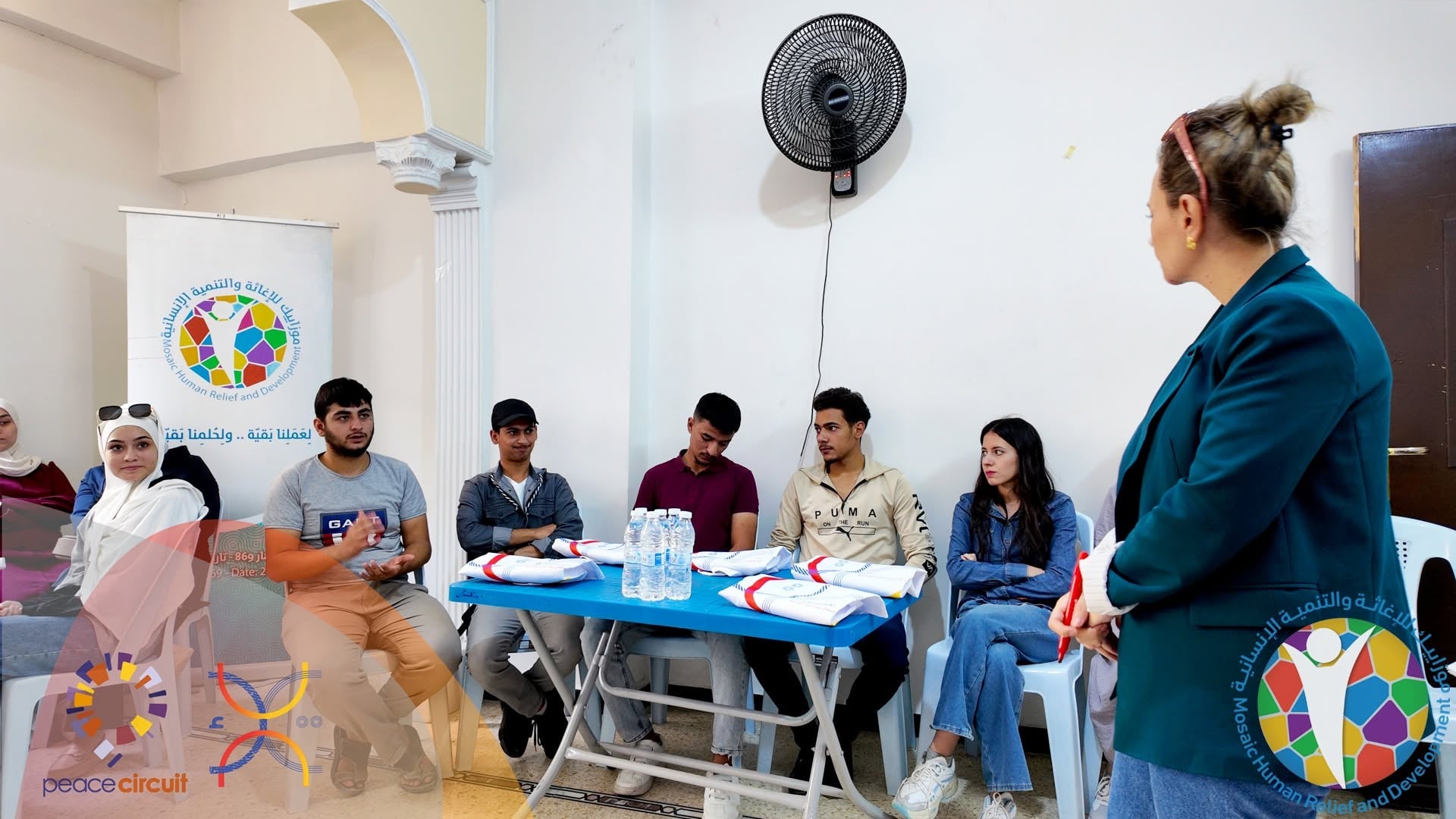
From a youth training program at the Dareat Salam Foundation
Youth Participation: From Being Present to Having an Impact
International calls for youth participation in peacebuilding are grounded in United Nations Security Council Resolution 2250, which was unanimously adopted on 9 December 2015. The resolution called on states to increase youth representation in decision-making, enable young people to participate meaningfully in peace processes and conflict resolution, and support their local initiatives.
The resolution recognizes that marginalizing young people undermines the prospects for lasting peace, while their participation brings their knowledge and experiences into efforts to address conflicts and their consequences.
In this context, Felipe Queipo says the United Nations works to create opportunities for young people to participate in discussion sessions and events, allowing their knowledge and experiences to contribute to these conversations.
He believes young people bring practical knowledge, life experience, and an ability to understand realities from perspectives that others may not see in the same way. This makes their participation important in discussions about the future of their communities.
He adds that inviting young people from developing countries and regions emerging from conflict, including Syria as it goes through a transitional period, to take part in international conferences and workshops can be a first step toward bringing what they learn back to their communities.
Queipo stresses the importance of giving civil society organizations opportunities to participate in United Nations conferences, high-level meetings, and regional and international dialogues alongside Member States, so they can contribute to discussions on the issues they work on.
He emphasizes that young people are not only the future; they are also part of the present.
For youth-led initiatives in Syria, participation goes beyond being given the opportunity to attend conferences or take part in discussions. The challenge remains turning what young people learn into action within their communities, reaching those who are reluctant to participate, building trust with them, and securing the resources needed to sustain these efforts.