



Reports | 28 09 2026
 Habib Shhada
A few days ago, several Syrian provinces saw protests over a decision to raise fuel prices, as the Ministry of Energy justified the move by citing higher global costs for securing petroleum products, alongside maintenance work at the Baniyas refinery. The increase quickly drove up transportation costs and prices, prompting some families and business owners to reassess their spending and daily needs.
On Saturday night, Sept. 12, the Ministry of Energy raised fuel prices on a “temporary” basis, according to its announcement. The price of a liter of 95-octane gasoline rose to 195 Syrian pounds from 152 pounds, while 90-octane gasoline rose to 185 pounds from 142 pounds. The price of a liter of diesel increased from 125 to 175 pounds. The new prices took effect on Sept. 13.
This was the second increase since the beginning of September, amid a pricing mechanism adopted by the Ministry of Energy since June to review prices based on changes in global costs and import and supply conditions. The ministry said the latest increase was driven by higher costs of securing petroleum products globally, coinciding with a comprehensive overhaul of the Baniyas refinery, which temporarily increased the need to import refined petroleum products.
But beyond the pricing mechanism and its justifications, another question is emerging: What happens to a Syrian family’s budget when the cost of fuel rises while incomes remain unchanged and purchasing power declines?
From Taxis to Walking: Families Cut Transportation Costs
Issam is a government employee who earns 1.5 million Syrian pounds a month. He told Rozana that the rise in fuel prices has directly affected his family’s expenses, including the cost of getting his children to school.
According to Issam, he can no longer afford the daily transportation costs, prompting his three children to walk to school, a journey that takes about half an hour.
Issam describes the increase as “sudden” and says it will not be limited to transportation, but will also affect the prices of goods and food supplies. He said he is concerned that he may not be able to afford diesel to heat his home during the coming winter.
Mona, a resident of the Mazzeh neighborhood of Damascus, was also forced to change the way her daughter gets to school. She had been paying about 25,000 Syrian pounds a day for a taxi to take her daughter from Mazzeh to a school in Abu Rummaneh, but the cost has risen, she said, to about 50,000 pounds a day.
She therefore switched to shared minibuses, known locally as “service,” despite the longer travel time to school.
Mona told Rozana that the increase prompted her to reconsider how her daughter travels after transportation costs became a burden that is difficult to sustain on a daily basis.
In rural Damascus, Samer made a different decision. He says he left his private car at home and began taking the bus provided by the company where he works to get to his job.
He told Rozana that filling his car with gasoline had become “backbreaking” after the price increase, prompting him to give up using his car except when necessary.
The pressure is not limited to household budgets. Higher fuel costs have also affected the movement of goods. The Ministry of Transport said that changes in petroleum product prices, particularly diesel, had significantly affected freight transportation, noting an almost complete halt in movement in several provinces amid strikes by truck owners.

Higher Costs Reduce Sales Activity
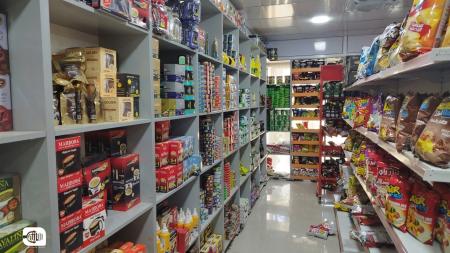
In Damascus, owners of food shops say that rising transportation costs have been accompanied by a decline in sales activity.
Abu Khaled, who owns a grocery store, describes market activity as “very bad.” He told Rozana that rising prices and transportation costs have reduced people’s ability to buy.
He adds that the problem is not only the increase in the price of products, but also the decline in people’s ability to afford them. Shop owners, he explains, find themselves dealing with goods whose delivery costs are rising at a time when consumers are becoming more reluctant to make purchases.
Abu Khaled says he used to offer free delivery to homes near his grocery store, but he is now considering turning it into a paid service or letting go of his delivery worker because of rising transportation costs.
His account points to another link in the chain of rising prices: higher fuel costs increase transportation expenses, higher transportation costs raise the cost of getting goods to market, while declining purchasing power reduces demand.
Between the Production Gap and Demand: Why Does Syria Need Imports?
The Ministry of Energy says the price increase came amid higher global costs for securing petroleum products, coinciding with the temporary shutdown of the Baniyas refinery for maintenance, which increased the need to import refined petroleum products. The ministry says the new prices are intended to ensure continued supplies and the availability of petroleum products in the domestic market.
According to the latest data presented by the ministry, Syria currently produces about 108,000 barrels of oil per day, compared with domestic needs estimated at between 300,000 and 350,000 barrels of crude oil per day. The crude produced locally is also not fully converted into gasoline and diesel, as some of it is heavy and not fully compatible with the refining capabilities and specifications currently available.
Ministry data also indicate that the Syrian market requires about 7.72 million liters of diesel per day, compared with domestic production of 3.09 million liters and imports of about 4.63 million liters. Imports therefore account for about 60 percent of supplies, according to the latest official data.
The official data and statements indicate that the production and refining gap continues to leave part of the market’s needs dependent on imports. The Ministry of Energy says that higher global supply costs and the maintenance shutdown at the Baniyas refinery have increased pressure on the cost of securing petroleum products during the current period.
What Does This Mean for Purchasing Power?
Economic expert Ziad Arabsh says that raising fuel prices will increase pressure on purchasing power, pointing to an increase of about 40 percent in the price of diesel and about 25 percent in the price of gasoline, and the resulting impact on the cost of living and doing business.
Economic expert Ammar Yousef, meanwhile, expects the prices of a number of goods to rise by between 10 and 25 percent. He said higher transportation and energy costs could prompt some Syrians to change their spending patterns and give up certain goods.
The accounts of the families who spoke to Rozana already show some of these changes, but at the level of everyday needs: giving up private cars, replacing taxis with shared minibuses, walking to school, and cutting back on services that have become more expensive.