


Reports | 2 06 2026
 lody ali
“Tadamon Massacre Team: We Handed Over All Evidence, Identifying Al-Abbasi Children Was Not Our Responsibility”
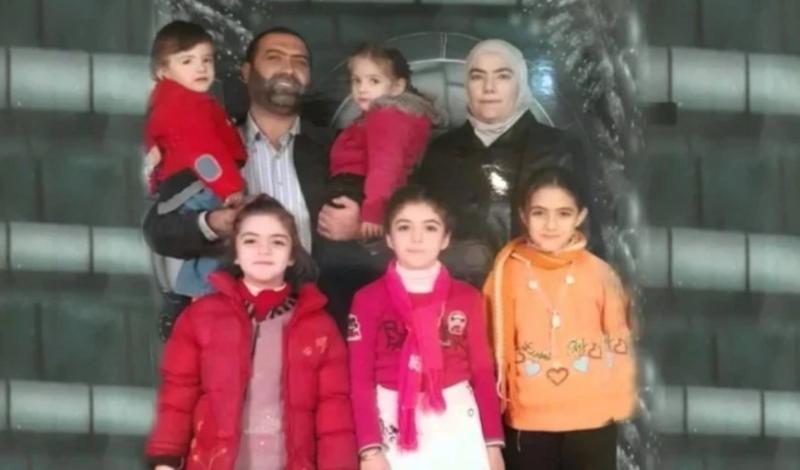
On May 30, 2026, the National Commission for Missing Persons issued what it described as its most painful statement since its establishment: six children from the Al-Abbasi family were killed by militias affiliated with the former regime. The announcement came after years of waiting and silence, based on what the commission called “reliable and cross-verified findings” reaching a high degree of professional certainty.
But almost immediately after the statement was released, a different kind of controversy erupted—this time not about the perpetrators, but about who delayed the truth, who concealed it, and who has the authority to reveal it. Yet a central question lingered: was there any evidence still withheld from the journalistic team?
Public mourning—and accusations in every direction
Hassan Al-Abbasi, brother of Dr. Rania Al-Abbasi, posted a video mourning his sister’s children, stating that he had seen visual material showing their bodies along with the voice of the accused, Amjad Youssef. But his message went beyond mourning. He leveled accusations in three directions: the National Commission for Missing Persons, which he said “published the news before the family had processed the shock”; the “Anصار Shhoud” team, which he accused of misinformation; and social media influencers who, in his words, added “spices” to a story that needed none.
“We were repeatedly let down and misled by multiple parties during the search for truth,” Hassan Al-Abbasi said.
Dr. Ammar Al-Issa, the commission’s lead investigator, said in a televised interview that the authority received evidence and visual materials—including videos and images related to the Tadamon massacres—from the investigation team via an intermediary organization in another country about two weeks prior to the announcement. He added that the commission submitted its case file to the Ministries of Interior and Justice for legal proceedings.
He did not mention any direct cooperation with the Shhoud team, which had previously conducted and published investigations into the Tadamon massacre.
The Shhoud team: “Justice has its conditions”
Anصار Shhoud and scholar Uğur Ümit Üngör issued a joint statement stressing that their investigation into the Tadamon massacres was conducted solely as an effort to assist the Syrian public.
They emphasized that images circulating on social media claiming to show “execution footage of the children” did not match any of the 29 videos in their possession. Instead, they suggested those images were likely generated using artificial intelligence.
On the question of withholding materials, their response was legal and categorical:
“We handed all evidence to the Dutch and German authorities. We were informed that, for any case against suspects to succeed, the chain of judicial custody must be respected and the video material must be securely preserved.”
Dummar Suleiman, speaking to Rozana, provided further details on the identification of Rania Al-Abbasi’s children and addressed what he described as unjust accusations against the team.
He said:
“Screenshots showing Amjad Youssef with Rania’s children during the killing are not present in the 29 videos we have. Hassan Al-Abbasi himself confirmed this. Those images were AI-generated. The video we relied on is entirely different.”
He added that the National Commission for Missing Persons had shown the video to relatives of the children, which led to their identification.
Suleiman continued: “Hassan Al-Abbasi personally contacted me at the end of April, after the arrest of the suspect in the Tadamon massacre, Amjad Youssef, and sent me photos of the children and their parents.”
“I replied clearly that all materials are now with the National Commission for Missing Persons and that he should contact them,” he said.
He stressed that the team had been unable to conclusively match identities:
“It was difficult for us to match the photos and identify the victims. We reached no definitive conclusion and realized we lacked the competence, authority, and tools to decide. Therefore, the case was referred to the competent bodies.”
He added: “We preferred not to disclose any information that could harm the integrity of the judicial process, leaving identification to the relevant human rights bodies.”
Suleiman said the team had no link between the videos in their possession and the children of Rania Al-Abbasi until Hassan contacted them on April 29, 2026, sending photographs. On May 22, he told Hassan to contact the National Commission for Missing Persons and the IIIM (International, Impartial and Independent Mechanism for Syria), noting that the videos were already with them and they were best placed to provide answers.
He categorically denied possessing any additional undisclosed videos.
He also noted that the team had believed that a meeting between researcher Uğur Ümit Üngör and the Syrian foreign minister indicated official coordination through that channel. However, after Amjad Youssef’s arrest, they were surprised when relevant authorities again requested the videos.
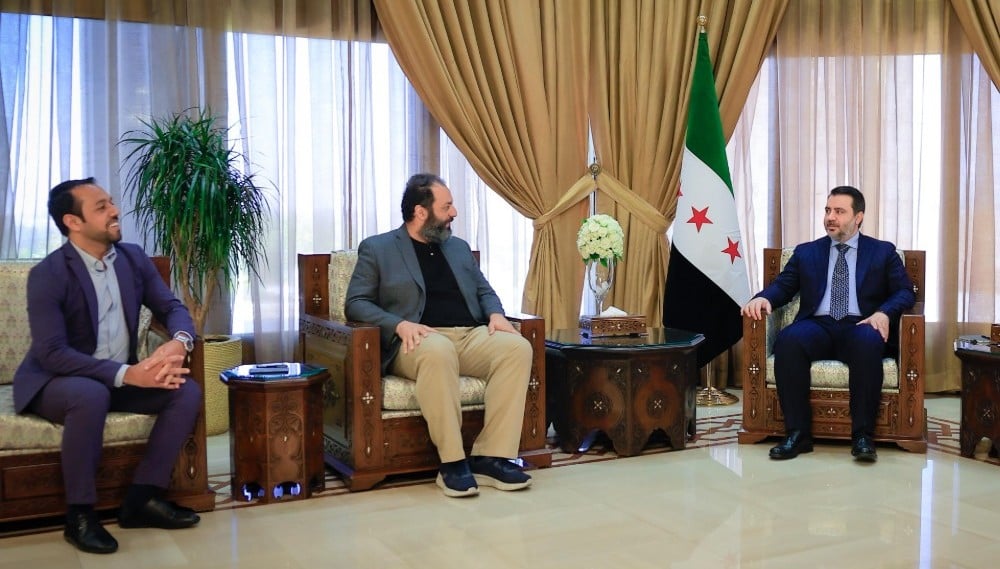
Syrian Foreign Minister Asaad Hassan Al-Shibani had met Üngör on August 5, 2025. Üngör reportedly expressed readiness for academic and practical cooperation with the Syrian government.
Team member Hazem Al-Abdullah previously stated in a piece published on May 11, 2026, that no official from the new Syrian government had contacted the team or requested copies of the evidence.
Redirecting the blame
In a later post, Hassan Al-Abbasi redirected his accusations toward what he called the primary responsible party, arguing that Bashar al-Assad bore ultimate responsibility for “all genocide massacres and systematic crimes committed against the Syrian people,” and vowed legal action against him.
He also criticized social media commentators for what he described as “inaccurate additions,” warning: “Our story could make stone weep; it does not need extra seasoning.”
Interior Ministry confirms Amjad Youssef’s involvement
In an official statement, the Ministry of Interior said it had obtained information and evidence indicating that the children were killed by groups and militias affiliated with the former regime, based on interrogations of detainees. It also confirmed that the National Commission for Missing Persons had provided video footage and information that supported the investigation.
The ministry confirmed the involvement of Amjad Youssef in the crime, while investigations continue to pursue other suspects.
It pledged to update the public on any developments “as soon as procedures are completed.”
Transitional justice authority
The National Authority for Transitional Justice, in coordination with the Missing Persons Commission, called on media outlets and the public to:
Address the case with the highest levels of responsibility and human dignity
Refrain from circulating unverified materials or information
Understand that full truth extends beyond determining fate, encompassing the mechanisms and responsibilities necessary to prevent recurrence and preserve national memory
The complexities of truth-seeking
The family of Dr. Abdul Rahman Yassin, Rania Al-Abbasi’s husband, reportedly received a phone call from transitional leader Ahmed al-Sharaa offering condolences.
But the unfolding debate has exposed a deeper structural gap in humanitarian protocols surrounding trauma disclosure and reporting. As judicial investigations continue to pursue all those involved, national memory appears to stand as the ultimate arbiter of this case—one that, as Hassan Al-Abbasi put it, does not need media “seasoning,” but rather justice that reveals every detail while preserving the dignity of victims above all else.
The case of Dr. Rania Al-Abbasi’s children remains a painful illustration of the complexities of truth-seeking in post-conflict contexts, where forensic evidence, institutional responsibility, and the rights of families to know intersect with questions of dignity and timing. Even as the file has been formally closed on the basis of converging international findings…