


Reports | 22 05 2026
A decision by Syria’s Ministry of Economy on Saturday to set the purchase price of wheat for the current season at 4,600 new Syrian pounds per ton of first-grade durum wheat has triggered widespread anger among farmers, amid warnings of heavy losses that could push many to abandon wheat cultivation in coming seasons.
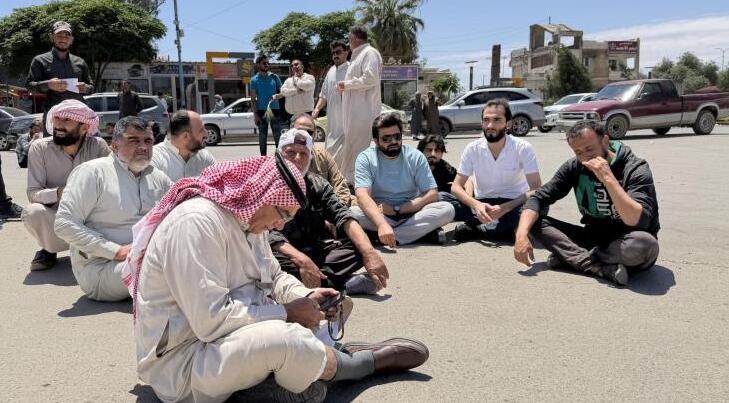
The discontent spilled into protests and public demonstrations on Sunday in Raqqa and Deir ez-Zor, alongside a protest statement issued by a gathering of farmers in southern Hasakah. Farmers who spoke to Rozana described the pricing decision as “catastrophic” and said it “does not even cover production costs.”
Under the new official pricing, one ton of wheat is valued at roughly $336 at the current exchange rate — a figure farmers say falls far below actual production costs, especially amid soaring prices for fertilizer, fuel, seeds, and harvesting expenses.
In Raqqa, farmers protested the new pricing by blocking roads leading to al-Naeem Roundabout and raising banners demanding that the price be increased to $500 per ton.
“We Buy in Dollars and Sell in Syrian Pounds”
Ahmad Abu Hamza, a farmer from Raqqa, told Rozana that farmers had been hoping for a pricing decision that would “do them justice” after what he described as an extremely costly season.
He said fertilizer prices rose during the season from around $550 per ton to between $750 and $800.
According to Abu Hamza, producing one ton of wheat this year requires nearly three dunams of land, while the cost of cultivating that area reaches roughly $300, including seeds, fertilizer, fuel, harvesting, and transportation. That leaves almost no profit margin, particularly given the possibility that wheat could later be classified into lower grades, reducing its final purchase price.
“Farmers had been waiting for the moment they could finally recover financially, hoping the government would treat them fairly,” he said. “But people today are shocked.”
He warned that many farmers may refrain from planting wheat or corn next season due to mounting debts and losses.
Another Raqqa farmer, Basrawi Abdul Salam, said the problem lies not only in the low purchase price but also in the fact that production supplies are bought in U.S. dollars while the harvest is sold in Syrian pounds.
“We will face the challenge of exchange-rate differences,” he said.
He estimated losses at around $25 per dunam and warned that cultivated areas are likely to shrink next season, with some farmers potentially forced to sell land to settle debts.
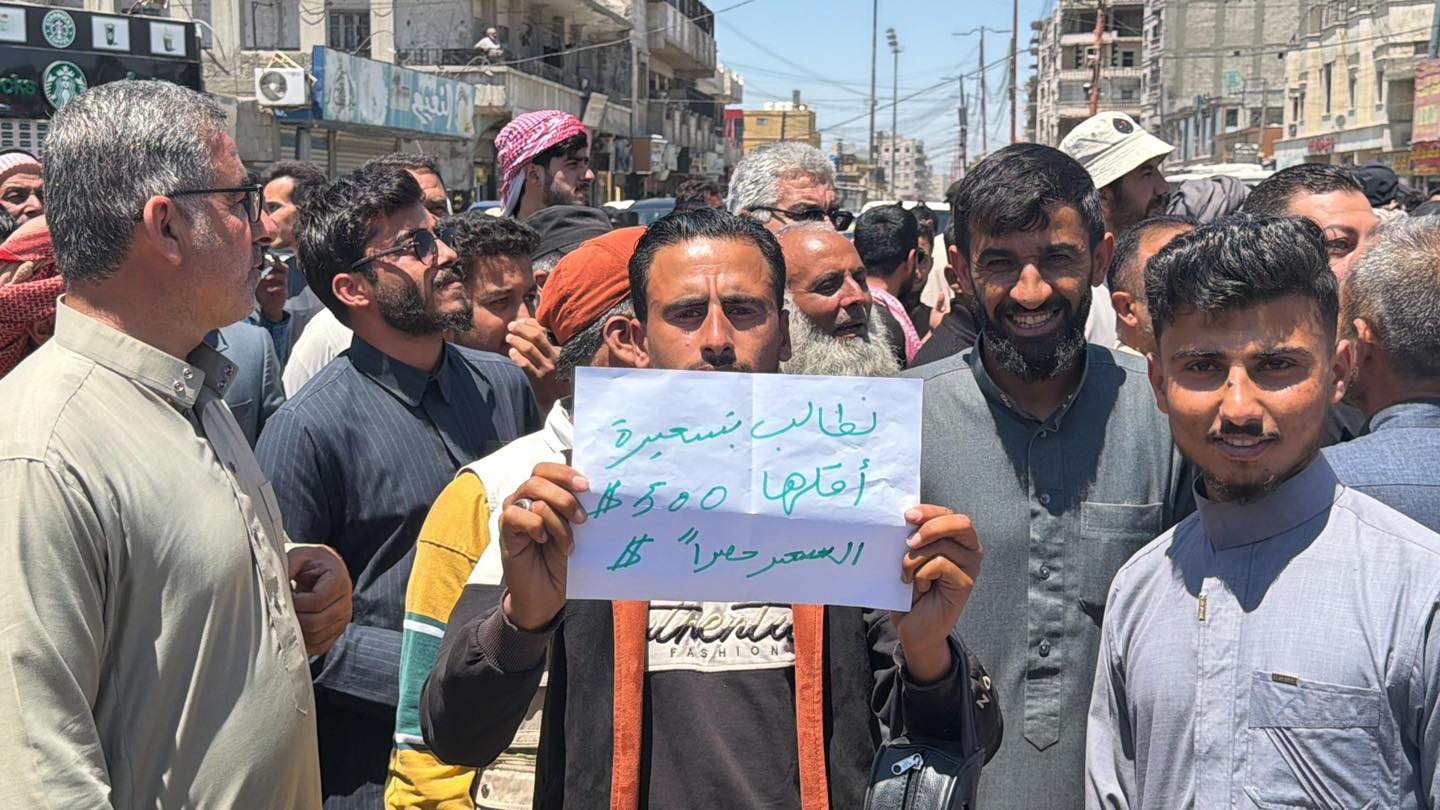
Farmers in Raqqa protest in the city center over the government’s wheat pricing policy. — Source: Internet
Al-Ghab Plain: “Production Costs Have Exhausted Farmers”
In the al-Ghab Plain in Hama countryside, farmer Musab al-Hajji from the town of al-Ziyarah said the wheat pricing “does not match the enormous production costs.”
He added that farmers this year faced additional burdens due to rising fertilizer and pesticide prices, as well as damage caused by heavy rain and flooding.
Al-Hajji said many farmers had expected the price per ton to reach around $600 in order to cover costs and provide a reasonable profit margin. He called for wheat purchase prices to be linked to the real cost of production and for agricultural supplies to be made available at subsidized prices.
Farmer Taher Khattab from the village of al-Huweiz estimated the cost of cultivating one dunam at between $75 and $80, while expected yields range between only 200 and 300 kilograms because of crop diseases and flooding caused by rainfall.
“A farmer waits an entire season only to end up with a profit that does not exceed $30 per dunam — and that is considered a loss,” he said.
Khattab predicted that large numbers of farmers would stop planting wheat unless the government revises the pricing policy or provides clear support measures.
During the 2025 season, Syria’s Ministry of Economy and Industry had set the purchase price of first-grade durum wheat at $320 per ton and first-grade soft wheat at $300 per ton, whether delivered in bags or in bulk, according to an official decision issued at the time.
The decision also included a marketing bonus worth $130 for every ton of wheat delivered to centers run by the Syrian Grain Corporation, effectively raising the value of first-grade durum wheat to around $450 per ton — compared with approximately $336 set for the current 2026 season.
Last season’s pricing structure also included adjustments based on wheat grades, impurity levels, and conditions related to proving land ownership or investment rights in order to qualify for the marketing bonus.
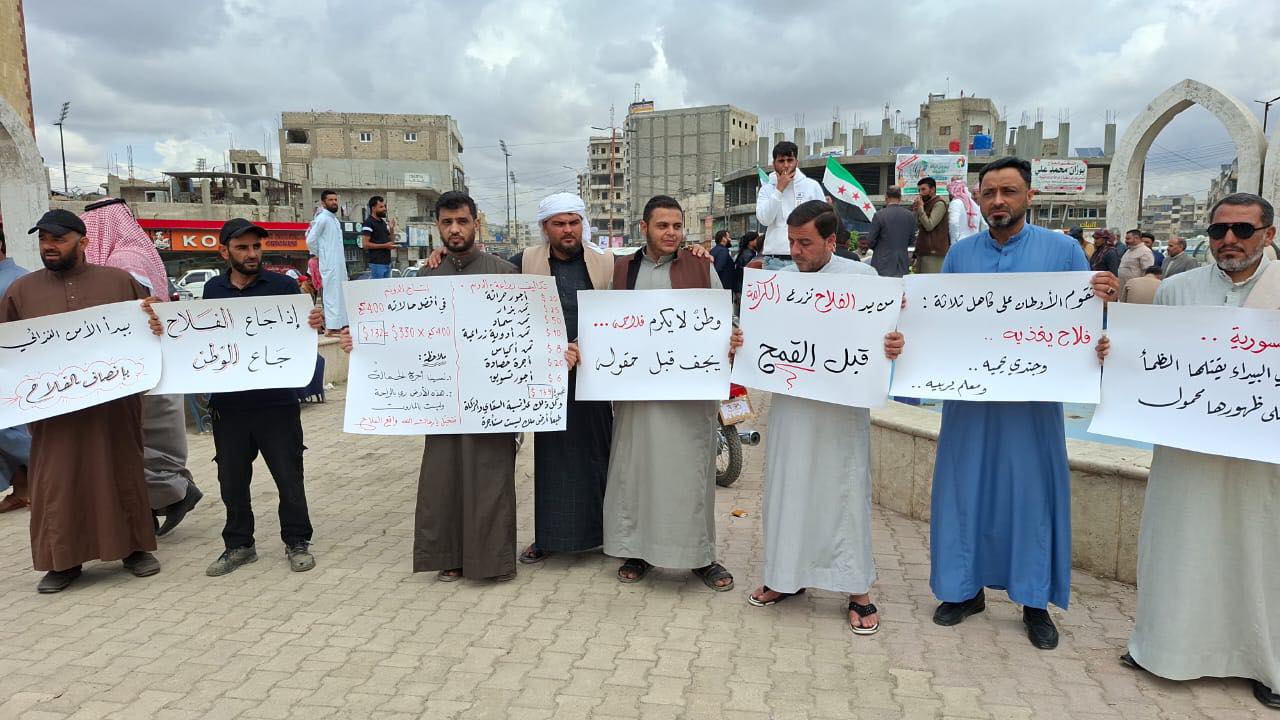
Farmers in Raqqa protest in the city center over the government’s wheat pricing policy. — Source: Internet
“The Final Nail in the Farmer’s Coffin”
In northern Aleppo countryside, farmer Abu Fadi from Deir Jamal said he spent nearly $8,000 cultivating 10 hectares, excluding harvesting and packaging costs.
He added that reaching the break-even point would require producing more than three tons per hectare — something he says is far from guaranteed this season.
In Deir ez-Zor, farmer Abdul Hakim told Rozana that the prices of fertilizer, irrigation, fuel, and plowing had “drained farmers financially.”
He said his crop had been damaged by rain and strong winds, and that production may not exceed 180 kilograms per dunam.
“I had planned to plant cotton and corn this summer, but after diesel prices increased, I abandoned the idea,” he said. “Right now, I’m thinking about emigrating.”
In Raqqa, farmer Suhaib al-Ali described the new pricing as “the final nail in the farmer’s coffin,” saying most farmers are already burdened by years of accumulated debt while fuel and fertilizer prices surged during the current season.
“The vast majority of farmers bought agricultural supplies on credit from traders,” he said. “Losses this season are 100 percent certain.”
Climate experts expect climate change to have a severe impact on Syria’s water resources, reducing total annual water availability by 32 percent by 2050. At the same time, water demand is projected to rise by 15 percent due to population growth.
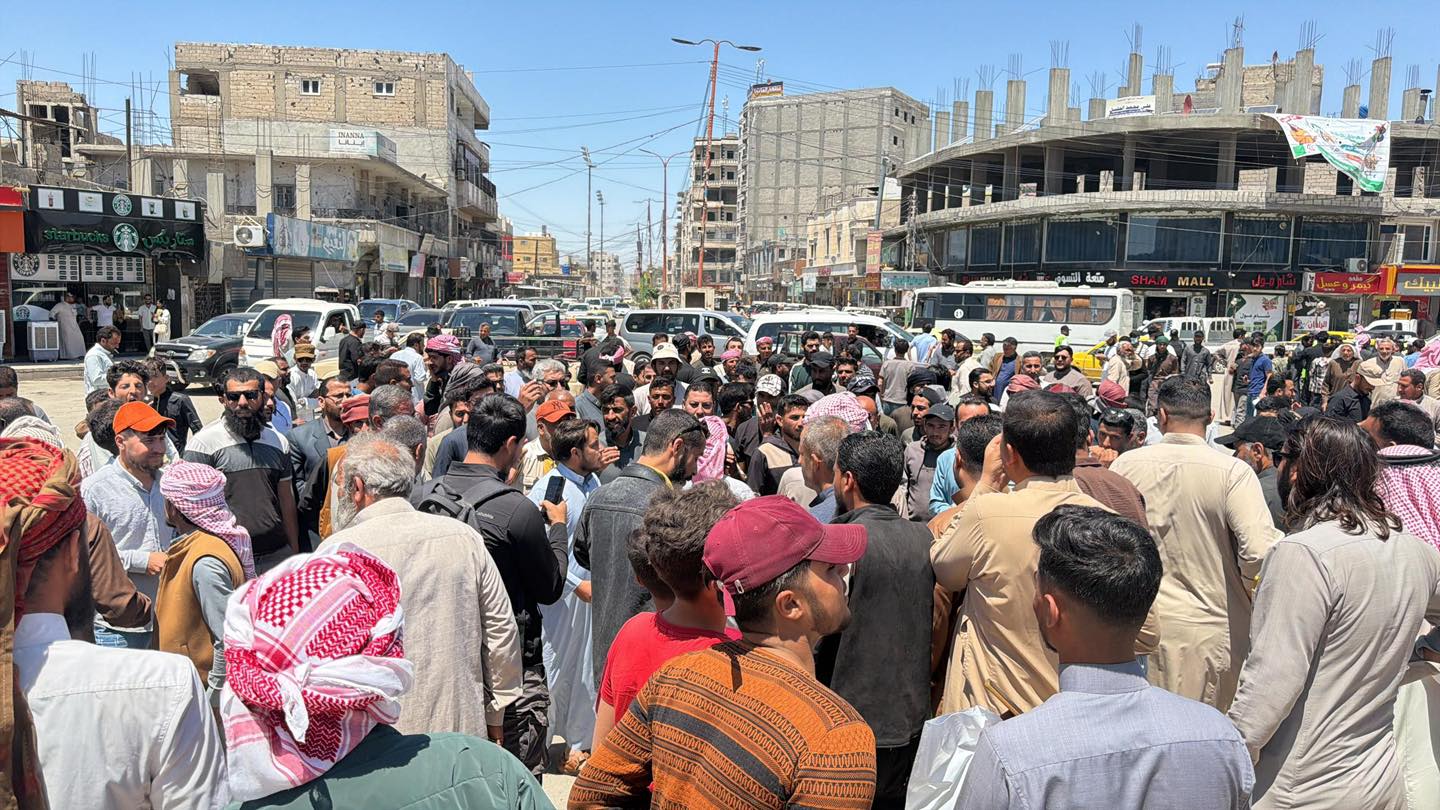
Farmers in Raqqa protest in the city center over the government’s wheat pricing policy. — Source: Internet
Farmers’ Unions in Daraa and Quneitra Protest
As objections escalated, the Daraa Farmers’ Union sent an official letter to the General Farmers’ Union demanding a revision of wheat prices for the current season, describing the set price as “unfair” and insufficient to cover soaring production costs, including seeds, plowing, fertilizer, pesticides, harvesting, and transportation.
The letter, signed by the head of the Daraa Farmers’ Union and the directors of the marketing and agricultural affairs offices, noted that the union had previously submitted detailed studies on rising production costs and called for a pricing structure that guarantees farmers a fair profit margin.
Meanwhile, the Quneitra Farmers’ Union announced its solidarity with farmers’ demands, saying the current pricing “has disappointed farmers.”
The union warned that maintaining the current pricing policy could push large numbers of farmers either to stop planting wheat in coming seasons or refuse to deliver their crops to the state this year.
Syria’s agricultural sector has been severely damaged by years of war. The country now ranks sixth globally in acute food insecurity, according to the 2024 report by the World Food Programme, with nearly 12 million Syrians suffering from food insecurity.
The controversy over wheat pricing comes as the Syrian Grain Corporation had earlier projected, in statements made in April, that wheat production for the current season could reach around 2.5 million tons, amid what it described as “positive” indicators for the agricultural season.
The corporation’s director, Hassan al-Othman, told the Syrian state news agency Syrian Arab News Agency that Syria’s annual wheat demand is estimated at around 2.5 million tons, saying the current season could strengthen prospects for achieving self-sufficiency and supporting food security in the country.
Social media platforms have also seen widespread anger and frustration, alongside warnings about the impact of the decision on food security, livestock, and the broader economic situation in northeastern Syria, widely regarded as the country’s most important agricultural region.
Farmers fear the current pricing policy could lead to a sharp decline in wheat cultivation next season, at a time when Syria relies heavily on domestic production to secure bread supplies and reduce imports.