


Reports | 23 04 2026
 Habib Shhada
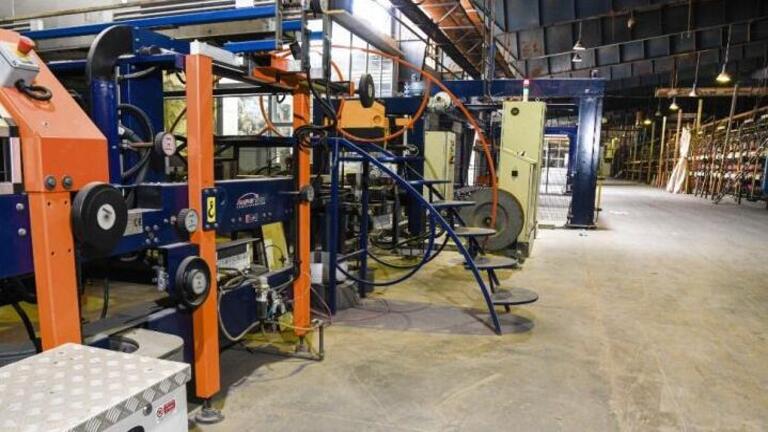
Within just a few days, the hum of ceramic machines faded across a number of factories in the Damascus countryside. For Amer, a man in his thirties who had spent 13 years in the sector, the silence was not merely a technical stoppage—it marked the abrupt end of an entire career path.
“The sound of the machines was our life,” he says, before finding himself, like thousands of other workers—most of them young—pushed out of the labor market, without compensation and with no clear alternatives.
Amer’s case was not exceptional. Production cuts and the shutdown of entire production lines did not just displace workers; they sidelined a broad segment of young people who had relied on this trade as their near-sole source of income, in a market already constrained by limited opportunities. For many, working in ceramics was not a choice—it was the last option available.
This shift coincided with a government decision allowing ceramic imports at reduced customs duties, raising questions about the impact of such policies on the survival of local industry.
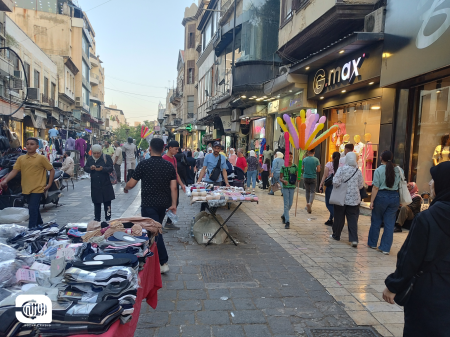
With the door opened to imports, foreign products entered the market priced between $8 and $9 per square meter, compared to $10 to $12 for locally made ceramics. While the gap may appear modest, it proved sufficient to tip the balance in favor of imports, gradually pushing domestic production out of competition.
Yet this disparity does not stem from weak local production, but from high costs. Fuel alone accounts for roughly 45 percent of manufacturing expenses, amid energy prices that exceed global averages, according to Abdul Rahman Orfali, general manager of Balqis Company. Meanwhile, imported goods benefit from low tariffs, granting them an edge that is difficult to match.
The price difference thus transforms from a market figure into direct pressure on factories, forcing them toward limited choices: absorb losses, scale down production, or shut down altogether. With each such decision, the cost is immediately passed on to workers.
More than 4,000 workers out of the market
Mohammad Marwan Orfali, head of the Energy Committee at the Chamber of Industry, confirmed that a significant number of factories have either fully or partially halted operations due to the opening of imports and their inability to compete. Speaking to Rozana, he said these facilities cannot continue under mounting losses, noting that laid-off workers receive only half their salaries—and only for a limited period.
These developments threaten the livelihoods of thousands of direct and indirect workers, with ripple effects across entire production chains.
According to Orfali, more than 4,000 skilled workers have already lost their jobs in a sector with an estimated $60 million in investments, amid compounding challenges, most notably rising energy costs and what he described as indirect support for imported products.
For Amer, the economic details were not entirely clear, but their consequences were immediate.
“After 13 years of work, I found myself with no other profession,” he says.
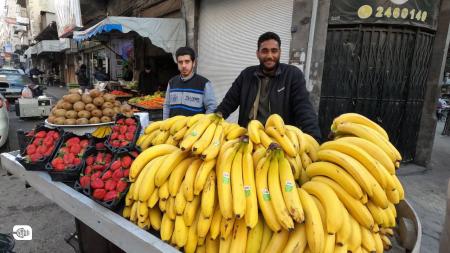
For him and many others, the question is no longer about markets or prices, but about how to secure an income in a country where more than 90 percent of the population lives below the poverty line, according to UN estimates.
Although the sector has a production capacity of around 53 million square meters annually, actual output does not exceed 8 million—a stark gap between potential and utilization. Despite this, policies have not moved toward supporting production, but rather toward facilitating imports without parallel measures to protect industry or workers.
This pattern is not new. Since 2012, ceramic factories have faced recurring energy-related crises, before later being allowed to import gas at their own expense. In 2023, imports were opened under the pretext of lower costs—a move industrialists warned at the time would halt production in favor of trade.
Today, as the scenario repeats itself more sharply, the issue appears less about competition and more about the direct outcome of policies reshaping the market at the expense of its most vulnerable groups. Every price advantage granted to imports translates, in practice, into additional pressure on factories—and a greater likelihood of closure.
In the end, the question is no longer when factories will resume operations, but who remains to return to them. Amer captures the scene in simple words: “The factory fell silent… and we fell silent with it.”