


Reports | 28 01 2026
 Katia Daghestani
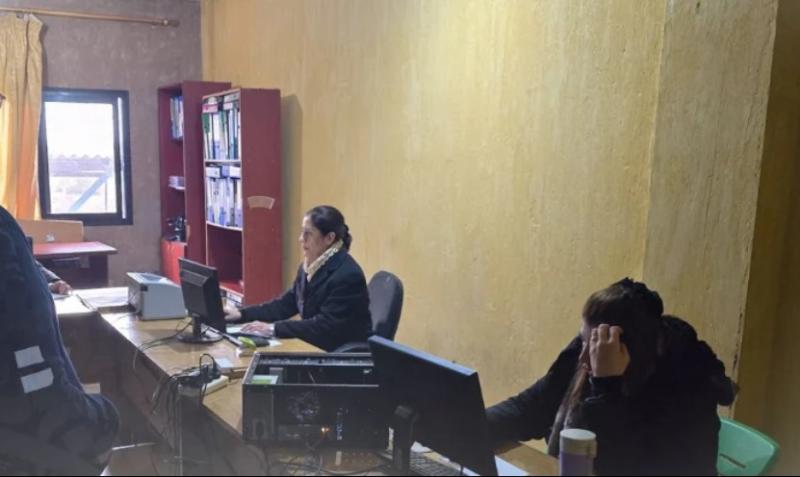
A directive issued by the Governorate of Latakia has sparked wide controversy in women’s and media circles after it called on all state administrations, institutions, bodies, and companies in the governorate to inform female employees not to wear makeup at all during official working hours, under threat of legal accountability.
The text of the directive, signed by Governor of Latakia Mohammed Othman and addressed to district directorates and administrative units, emphasized the necessity of compliance with the decision without clarifying the legal or administrative bases on which it was founded.
This directive comes after months of similar demands made by the governor of Latakia. In May, during separate meetings with representatives of three Christian denominations, he had called for a directive requiring women to wear “burkinis” in mixed swimming pools and beaches, asserting that some styles of dress “negatively affect public morals,” referring to an incident he said involved his son, according to activists at the time.
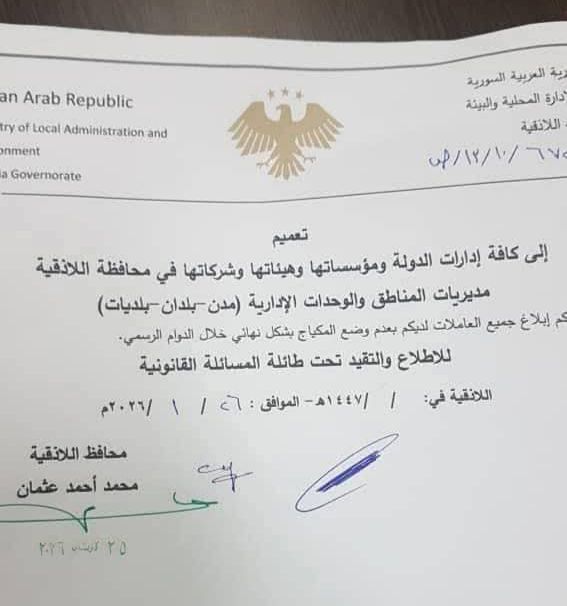
“Latakia Governor’s decision to ban makeup for female government employees – Social media”
Why a Makeup Ban?
The decision to ban makeup during official working hours was met with broad rejection by women working in various sectors who spoke to Rozana Radio. They described it as direct interference in personal freedoms and an unjustified targeting of women in particular.
• Rasha, a 38-year-old nurse, told Rozana that the directive was “interference in personal freedom.” She added:
“If the decision had been framed around adhering to a formal or neat appearance, it would have been more acceptable, but banning makeup specifically is unjustified. I am veiled and don’t wear much makeup to begin with, but that doesn’t mean I support this directive — I completely reject it.”
She also wondered why the directive was being applied only in Latakia Governorate and not elsewhere.
• Suha (a pseudonym), a 32-year-old journalist, said:
“I like wearing light and simple makeup, and that is a personal choice. ‘Decency in dress is an understandable requirement at work,’ but intervening in makeup is unacceptable. There are much more pressing service and livelihood problems than the way women look, and the governorate should pay attention to priorities.”

Accusations of Ideological and Class Bias
Raheel, a schoolteacher in her forties from the city of Jableh, went further, stating that she would not comply with the directive even if it led to her dismissal:
“This is a prelude to imposing the hijab indirectly. Why only Latakia?”
She added that the directive has a class dimension, explaining:
“Those who can afford cosmetic procedures like fillers and Botox may not need makeup, while those who cannot afford them are forced to forego even simple adornment.”
Lara, a 36-year-old teacher in the city of Latakia, said she usually wears a bit of lipstick and mascara, and added that she would stop wearing them if they harmed her job. However, she echoed Raheel’s point about fillers and Botox being available to those who can afford them, and that the directive would reinforce class disparities.
Despite their general rejection of the directive, all the women who spoke to Rozana said they would refrain from wearing makeup if doing so jeopardized their jobs, with the exception of Raheel, who insisted she would stand by her position even if it led to dismissal.
Responses from Rights Advocates and Activists
Activist Rami Vitali described the wording of the directive as “wrong from the outset.” On his Facebook page, he said the directive represented “direct interference in personal freedoms and a violation of the constitution,” adding that the acceptable approach would have been a general recommendation for a neat appearance, not an outright ban under threat of legal accountability. He also noted that “even some men use cosmetic products to conceal unattractive features,” questioning the difference between makeup and hair dye or cosmetic procedures.
Journalist Kamal Shaheen said the directive represented “interference in the personal affairs of women in the Syrian public sphere.” He warned that what is happening could later extend into public spaces and the street, cautioning against a regression in the status of Syrian women and what they have achieved in recent years in terms of rights, and stressing that there were thousands of other problems Syrians face that deserved the governor’s attention instead of decisions like banning makeup.
Criticism from Women’s Rights Organizations
Feminist activist Sawsan Zakzak described the directive as “flagrant interference in the lives of women and personal freedom for every woman who has the right to choose how she wants to appear.” She stated that personal rights are guaranteed to all citizens — men and women — and are an essential part of human rights, and that the directive contradicts the text of the Syrian Constitutional Declaration and the state’s international human rights obligations. She concluded: “Leave women and women’s dress to what they want to do — let them be.”
Rights activist Rima Flihan said that if the directive is true, it “constitutes a dangerous indicator of the authority’s orientation,” reflecting an attempt “to reshape Syrian society and change its identity, and a clear violation of women’s personal freedoms.” She described the decision as “arbitrary and not based on any legal basis,” questioning the legal mechanism that would be used to hold non-complying women accountable. She called for an immediate withdrawal of the directive.
Official Confirmation of the Directive
Despite rumors about the directive being withdrawn or deleted from the governor’s Facebook page, the director of media relations in Latakia Governorate, Nour al-Din Brimo, confirmed to Rozana that the directive had indeed been issued, although he said “there is no additional official statement regarding it,” without further details on its background or implementation mechanisms.
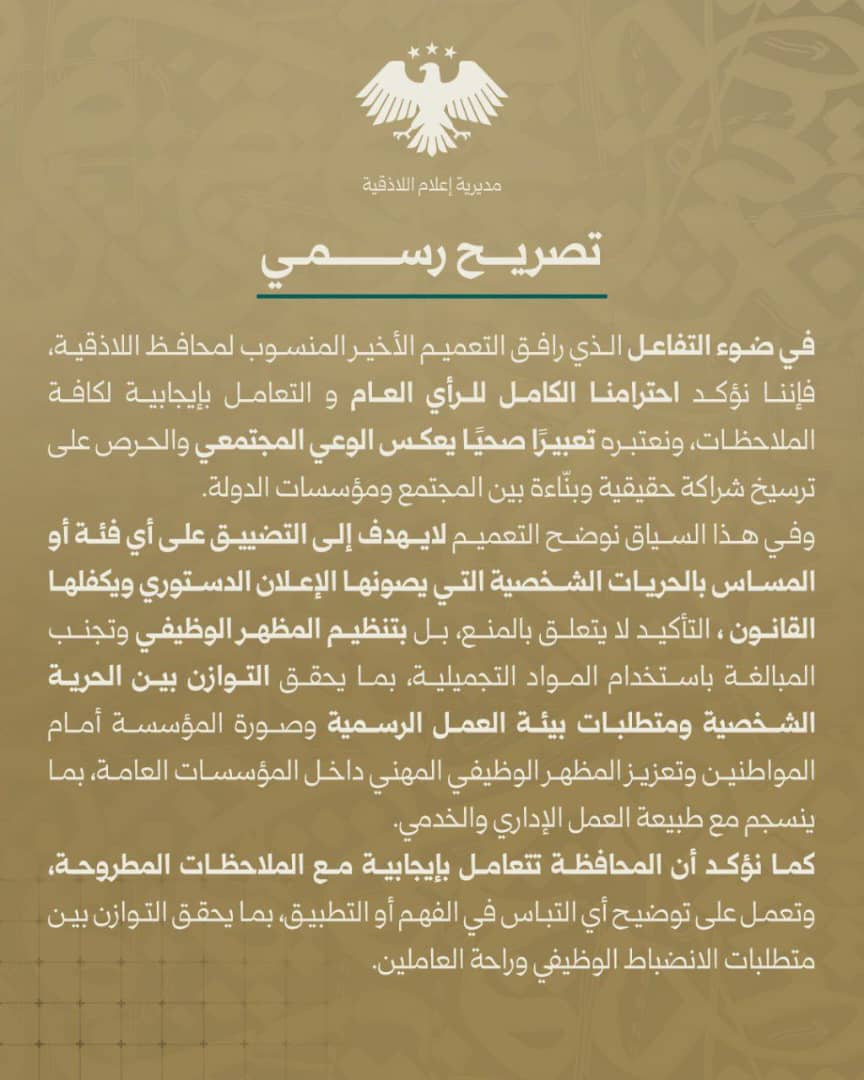
“Latakia Governorate clarification on the decision to ban makeup for female employees – Official Facebook page”
The Latakia Media Directorate issued a clarification affirming the validity of the directive, explaining that its goal was to organize workplace appearance and avoid exaggeration in the application of makeup.