


Reports | 16 01 2026
 Katia Daghestani
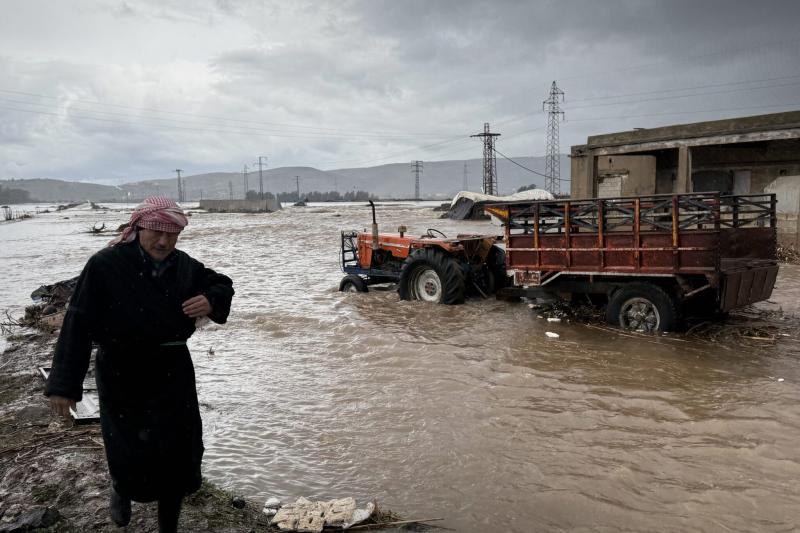
Over the past 48 hours, residents of villages in northern Homs countryside have lived between astonishment and joy, with the falling of unprecedented amounts of rain that ended harsh years of drought that had weighed heavily on them and exhausted their lands.
While the torrents seeped into some homes and fields, the rain appeared to many as a message of hope long awaited, rejuvenating the land and refreshing farmers’ hopes for better seasons.
The effects of the downpours were not limited to the residents’ daily scene, as the nearby Rastan Dam witnessed a noticeable rise in storage levels during the past two days, reaching about 55 million cubic meters, according to a local official to the SANA agency.
Rozana continued to communicate with civilians in two villages near the city of Rastan, who narrated their stories with the rain — between joy that returned to the fields, and suffering imposed by the floods, and what these rains carry of direct impacts on their daily lives and agricultural future.
“Blessing for Two Seasons After a Drought That Killed Us”
Mohammad Akhouriq, owner of olive and almond cultivation lands in the village of Abu Hammamate, cannot hide his joy after years of drought, despite a single negative he sees, represented by the flooding of wells and damage to pumps, cables, and electricity.
He told Rozana: “About two months ago, I uprooted about 150 olive trees from my agricultural land because they dried out from drought, but now, with the rainfall amounts, God will compensate the farmers well for two seasons perhaps.”
Before the rains intensified, Mohammad was able to “harvest the lentil crop” from about twenty dunams before the torrents overtook it.
He concluded his talk to us with an optimistic tone, saying: “The drought nearly killed us. I hope we get good seasons this year; things have improved a lot after the rain. I hope the season completes well, for a long time we have not had rainfall amounts like these in our area.”
“Olive Owners Are Comfortable and I Am Cleaning”
As for “Umm Ahmed” in the nearby village of Deir Fool, her suffering was in removing the rainwater from the house after it suddenly confronted them.
She tells Rozana with a smile, in the local dialect: “Olive owners are comfortable with this rain for sure, but I can’t keep up with scraping and cleaning to drain the water outside the house. Even the shopkeeper’s store got water and he lost most of his goods. Oh poor thing. But always there’s good along with harm. God sends good.”
For her part, Lana confirmed that there were no major damages to crops, explaining that the residents did not have the intention to cultivate due to the drought, but after the rains fell, the desire to cultivate returned strongly, although the successive rains have not yet given them a chance to start.
The agricultural sector in Syria has been affected by years of war, as the country now ranks sixth in the world in acute food insecurity, according to the World Food Programme’s 2024 report, in addition to the presence of about 12 million Syrians suffering from food insecurity.
Damage Is Relative… and Good Exams for Students
Mrs. Lana points out that the homes and the school located in relatively elevated sites in Deir Fool did not suffer like the homes, commercial shops, and pharmacy near the main road or on sloping roads.
She describes the situation according to her observation: “Homeowners are placing pots to drain water, and some of the ceilings were already damaged by bombardment (…) The school is in good condition, they turned on heaters for the students, and they held good exams safely and soundly.”
Umm Ahmed noted that electricity was partially disrupted due to “water entering some homes by about a cubit,” while the village bakery returned to operation after stopping for about four hours, following the civil defense’s intervention by opening a channel for the torrent.
Heavy Rainfall and Torrents in Umm Hammamate and Deir Fool in Homs – Rozana
Heavy Rainfall and Torrents in Umm Hammamate and Deir Fool in Homs – Rozana
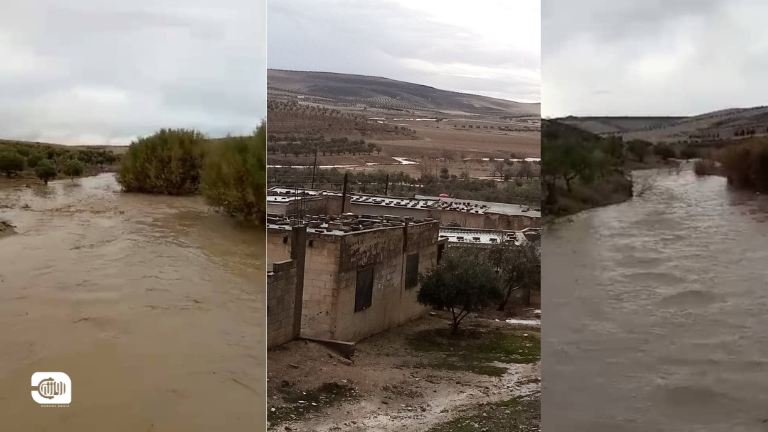
Heavy rainfall and torrents in the villages of Umm Hammamate and Deir Fool in Homs – Rozana
What Do the Maps Show in the Two Villages?
The research that Rozana conducted through NASA’s Earth observation site using interactive satellite images showed large amounts of rainfall on the villages of Deir Fool and Abu Hammamate, and also in the countryside of Homs and Hama in general during the past two days.
When browsing the maps and reviewing the rainfall data layers, high rainfall rates were observed, represented by the red and orange colors.
The orange and red colors in their different shades indicate a high rainfall rate (millimetres per hour), while the yellow and green colors indicate lower rates, changing according to hour and day.
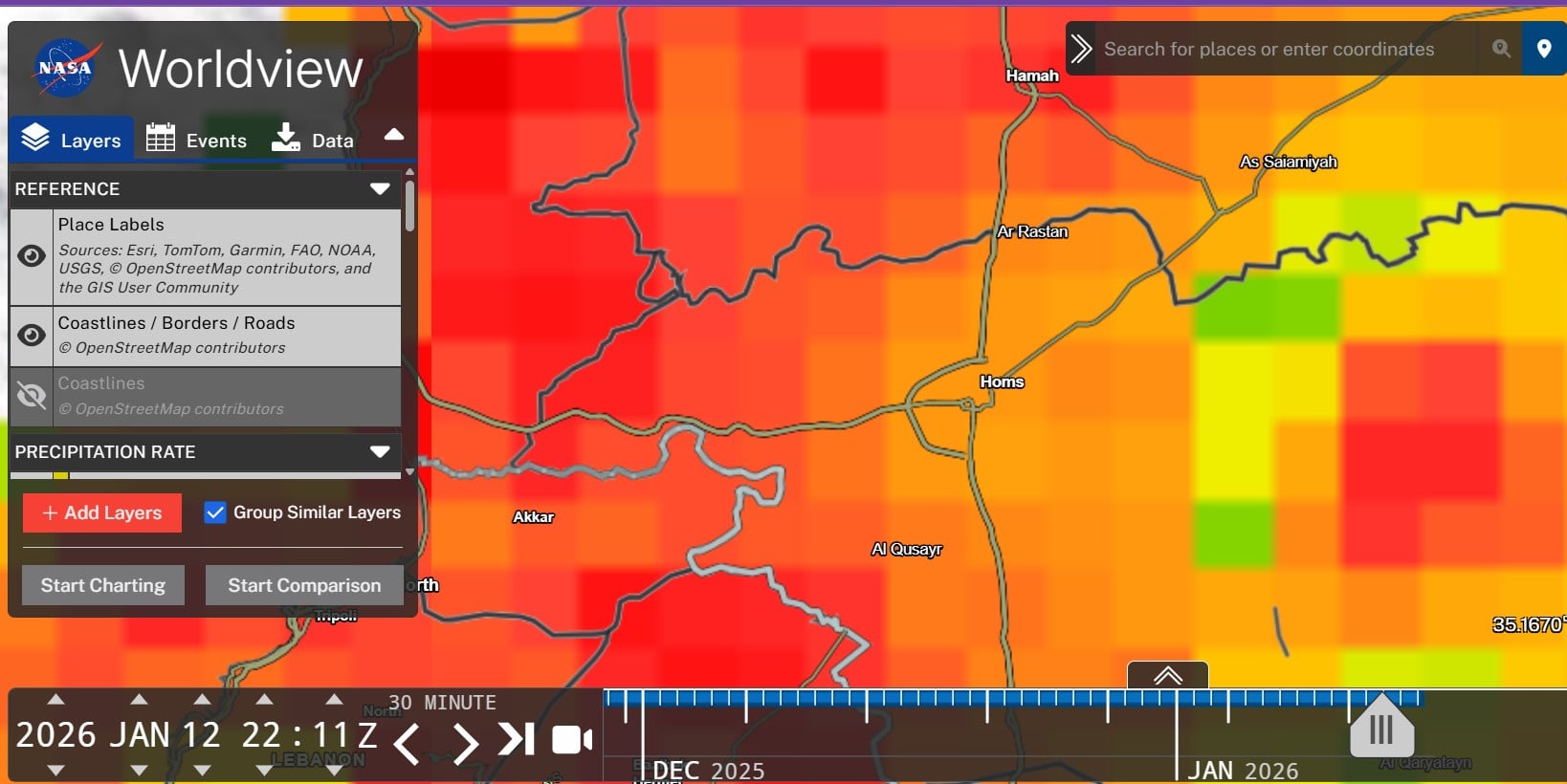
Rainfall rates in the villages of Deir Fool and Abu Hammamate in Homs countryside – NASA Earth Observation website
High rainfall rates continued in western Homs countryside until last Tuesday, according to what NASA’s map data shows, which intersects with Rozana’s residents’ testimonies.
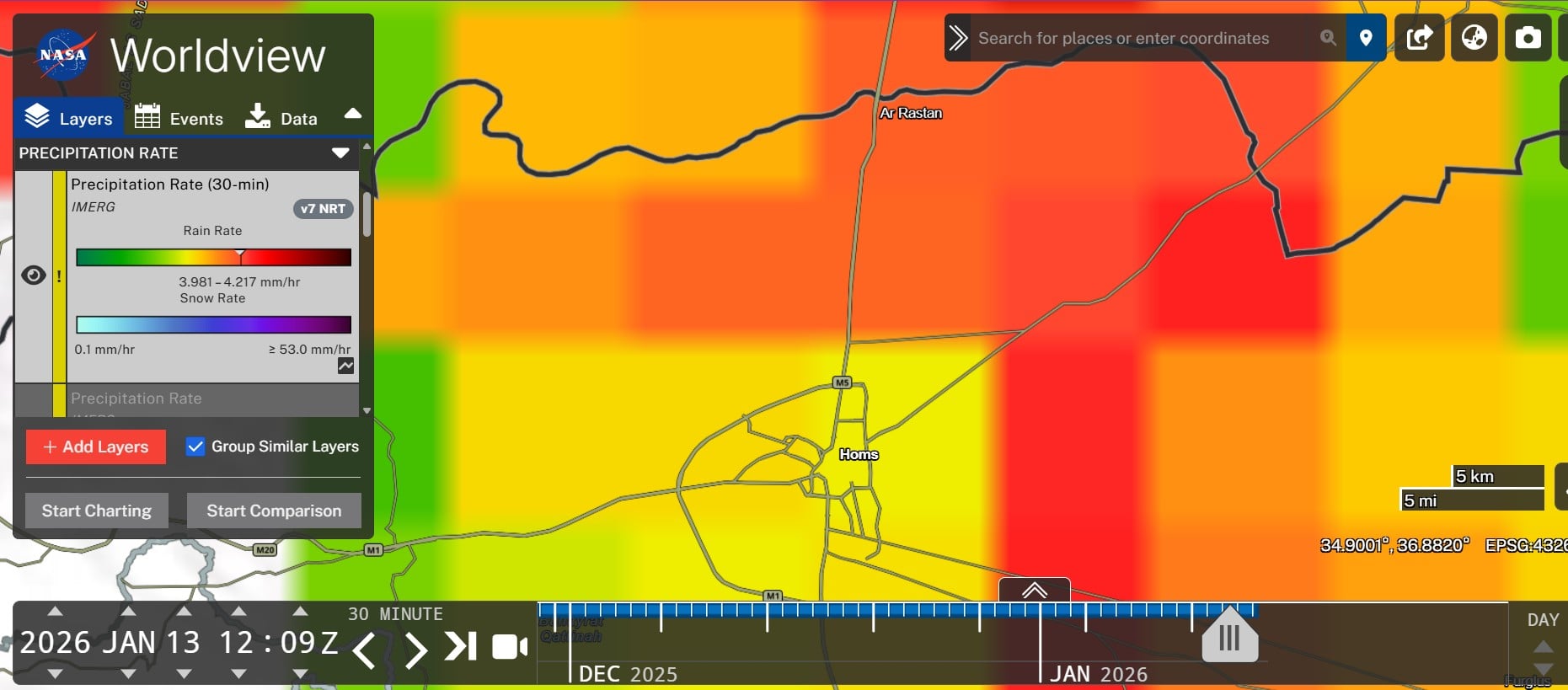
Rainfall rates in the villages of Deir Fool and Abu Hammamate in Homs countryside – NASA Earth Observation website
Rainfall in various Syrian provinces during the past two days led to the flooding of a number of camps in the north of the country, while the civil defense rescued 25 civilians trapped by the torrents in the village of Umm Jame’ in the Tel Kalakh area in western Homs.
Residents of northern Homs countryside are awaiting what the coming days will bring. For many, these downpours remain an opportunity to compensate for what was lost, and the beginning of a season that may be better than its predecessors.