


Reports | 15 12 2025
 rozana
In the first year after the fall of Syria’s former regime, the country has undergone a series of economic shifts—often contradictory—marked by controversial monetary proposals, sweeping investment pledges and tentative reforms to public-sector wages.
As the transitional government struggles to stabilize an exhausted economy, it faces daunting challenges: persistently high inflation, weak institutional capacity and sharp divisions between expert assessments and everyday public experience.
This report examines the most prominent economic files of the past year, tracing the efforts undertaken, the controversies they sparked and the potential pathways for rebuilding Syria’s economy.
A New Syrian Currency.. Economists Are Split
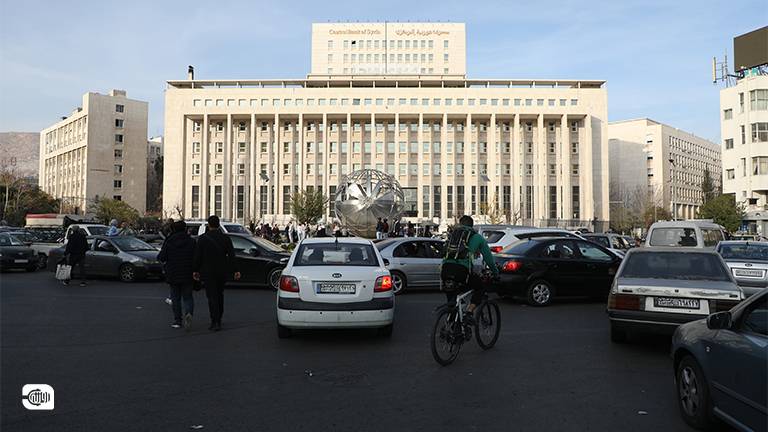
When Syria’s central bank revealed in August its intention to issue new banknotes by removing two zeros from the Syrian pound—a move aimed at restoring confidence in the currency—it immediately triggered wide debate among economists and the public alike.
Some economists argue that redenomination could deliver a positive psychological boost and help reduce monetary chaos. Others warn that the move would be costly and poorly timed, given ongoing inflation, fragile banking infrastructure and the absence of deeper structural reforms.
Earlier this month, the central bank said it had not yet set a final date for issuing the new currency. Governor Abdelkader Husrieh later told Reuters that the planned issuance would include eight denominations, describing the new currency as a “signal and symbol of financial liberation.”
Central Bank of Syria - Rozana
Inflation: From 170 Percent to Just 15
In an interview marking the first anniversary of the regime’s collapse, Governor Husrieh said inflation had fallen dramatically—from 170 percent on the “night of the fall” to just 15 percent.
About a week earlier, he told Reuters that authorities were still working to develop reliable methods for estimating gross domestic product, acknowledging that Syria lacks credible economic data.
Inflation—defined as the sustained rise in prices of goods and services—erodes purchasing power and raises the cost of living. While official figures point to improvement, living standards tell a more complex story.
A February bulletin by the Syrian Center for Policy Research noted that despite a decline in inflation driven by lower prices for some goods and services and a stronger Syrian pound, wages remain insufficient to lift households above the poverty line, leaving families under continued economic strain.
Investment Promises Under Scrutiny
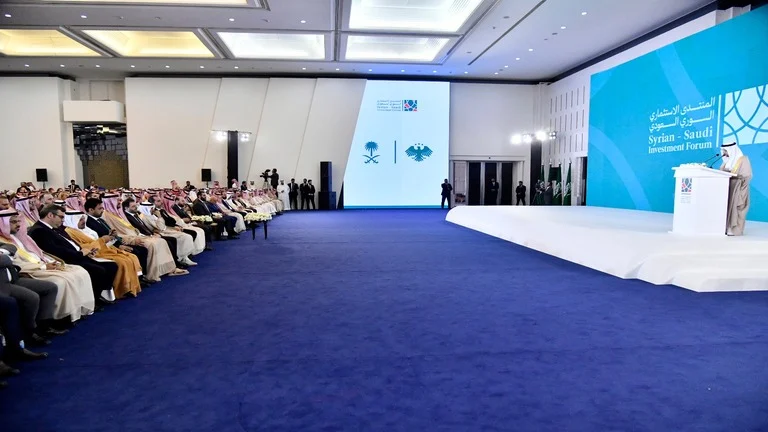
Investment has been a central theme of the transitional presidency. Interim President Ahmad al-Sharaa has spent recent months meeting Syrian, Arab and foreign business leaders, promoting Syria as open for reconstruction.
Yet several high-profile investment memoranda of understanding (MOUs) have been met with skepticism, particularly as some of the companies involved are accused by critics of lacking a track record commensurate with the multibillion-dollar projects announced.
Over the past year, this outlet published detailed investigations based on open-source datainto entities that signed MOUs for projects collectively valued at billions of dollars.
Syrian-Saudi Investment Forum - SANA
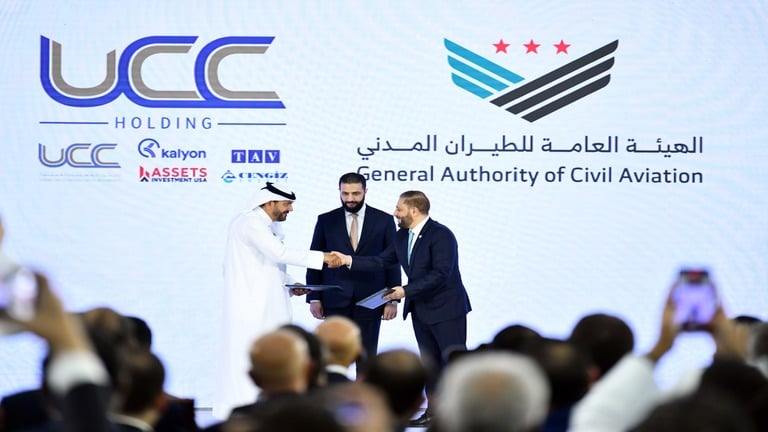
The investment was initially valued at $7 billion and, according to the energy minister, is expected to create more than 50,000 direct jobs and 200,000 indirect ones. Last month, the same consortium finalized contracts worth $4 billion to develop, expand and operate Damascus International Airport.
Among the most significant deals to move beyond pledges, Energy Minister Mohammad al-Bashir signed executive contracts last November to build eight power plants with a combined capacity of 5,000 megawatts. The project is led by a consortium headed by UrbaCon Holding, chaired by Syrian-Qatari businessman Ramez al-Khayyat.
A World Bank report published this year underscored the depth of Syria’s investment collapse, noting that both public and private investment had been severely eroded by the war. Investment fell from an average of 19.2 percent of GDP between 2006 and 2010 to just 14.2 percent between 2011 and 2022—a low level even by the standards of conflict-affected economies.
It remains unclear which of the recently signed MOUs will materialize into binding contracts. Some experts question the seriousness of certain agreements, while others point to investor reluctance pending the full removal of U.S. sanctions under the Caesar Act.
Wages: Raises, Promises—and Protests
The past year saw only one public-sector wage increase: a 200 percent raise in June, far short of the initial promise of a 400 percent hike.
In September, Finance Minister Mohammad Barniyeh told Al Jazeera that the raise had boosted public employees’ purchasing power by three to four times, thanks to exchange-rate improvements and added allowances.
He said the second phase of wage reform—planned for next year—would include targeted increases for key sectors such as the judiciary, education, health, oversight bodies, security and defense. Some judicial salaries, he said, could rise by as much as tenfold.
A third phase would introduce sweeping reforms to the civil service law, including scrapping the unified employment system and adopting flexible pay structures tailored to individual ministries.
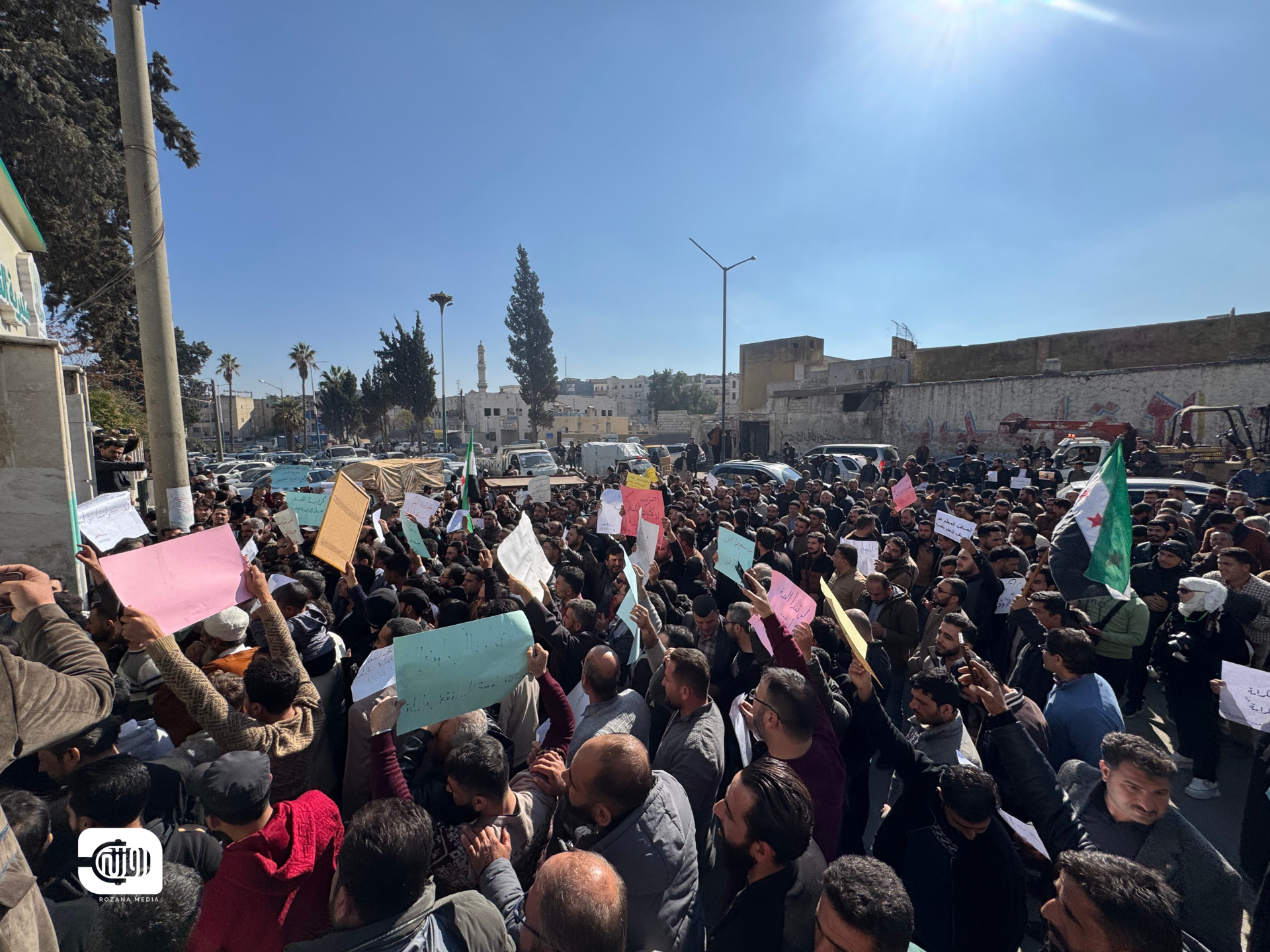
The year was also marked by protests and widespread anger over what employees described as “arbitrary” dismissals. The transitional government said the layoffs were part of efforts to eliminate so-called “ghost employees,” though many ministries later reversed a significant portion of the decisions.
Separately, several ministries issued decrees reinstating employees who had been dismissed for reasons linked to their participation in the Syrian uprising.
Teachers' protest in Idlib - Rozana
Poverty, Power—and the Year Ahead
According to World Bank estimates, 24.8 percent of Syrians—about 5.7 million people—live below the international poverty line for low-income countries, defined as $2.15 per person per day.
Following the regime’s collapse and the new administration’s takeover of Damascus, the transitional government now controls 78 percent of Syria’s population and 60 percent of its economy. Yet it oversees only 9 percent of oil production, with the vast majority remaining under the control of the Syrian Democratic Forces.
Economists say the success of the government’s economic policies will hinge on effective implementation, transparency and the rebuilding of trust among citizens, institutions and investors.
The coming year, they argue, will be a decisive test of whether the transitional government can turn ambitious promises into tangible improvements in Syrians’ daily lives.