


Reports | 5 12 2025
As attention turns toward public services in Syria’s main cities — where comparisons, statements, and political debates dominate — internally displaced people (IDPs) find themselves pushed outside the circle of concern.
A full year after the fall of Bashar al-Assad, the daily suffering of IDPs continues both inside and outside displacement sites, with little to no response from official or non-governmental bodies to their most basic needs.
Despite harsh conditions and a widespread sense of abandonment, the political shift brought by the regime’s collapse and the former president’s flight to Moscow has opened the door for nearly two million IDPs to return to their homes or leave shelters and displacement camps.
At the same time, the battles that preceded the regime’s fall — along with the events in Sweida and the coastal region — triggered a new wave of displacement involving hundreds of thousands of Syrians.
This report sheds light on the current reality inside displacement sites and in areas of return, reviewing key figures and developments that have shaped Syria’s internal displacement landscape during the year following the regime’s collapse.
“A Tent Is Better Than the Village!”
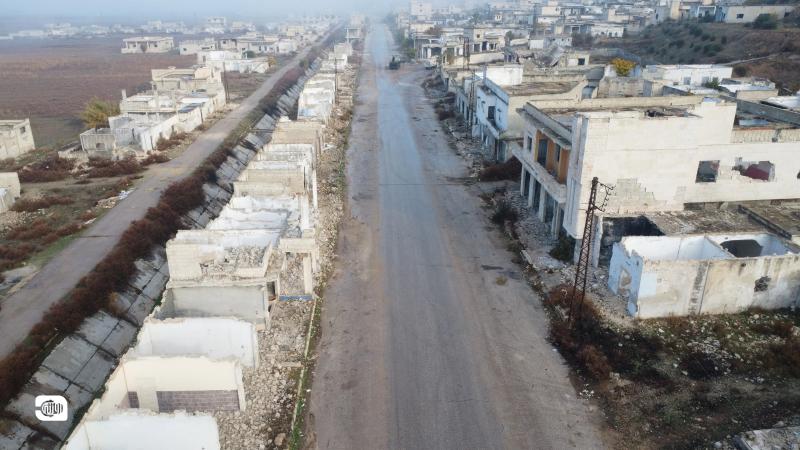
Although Khaled Hilal celebrated the fall of the former regime, disappointment is clear in his voice as he speaks to Rozana about why he has been unable to return to his village in eastern Hama countryside.
Speaking from his tent in Idlib, he says:
“We were happy the country was liberated. I went back to the village with great hope for stability, but the devastation was shocking. The tent here is better than the village — thank God.”
He points to the near-total absence of services. If he were to return, he would need to purchase water from private tankers — something beyond his financial means. He would also have to walk 2 kilometers to buy basic necessities, while the nearest hospital lies 40 kilometers from his “devastated” village.
He concludes: “Even if we push ourselves to return, we don’t have the money. Our financial situation is zero It’s too costly. The tent is better — even with the harsh winter and the lack of preparation.”
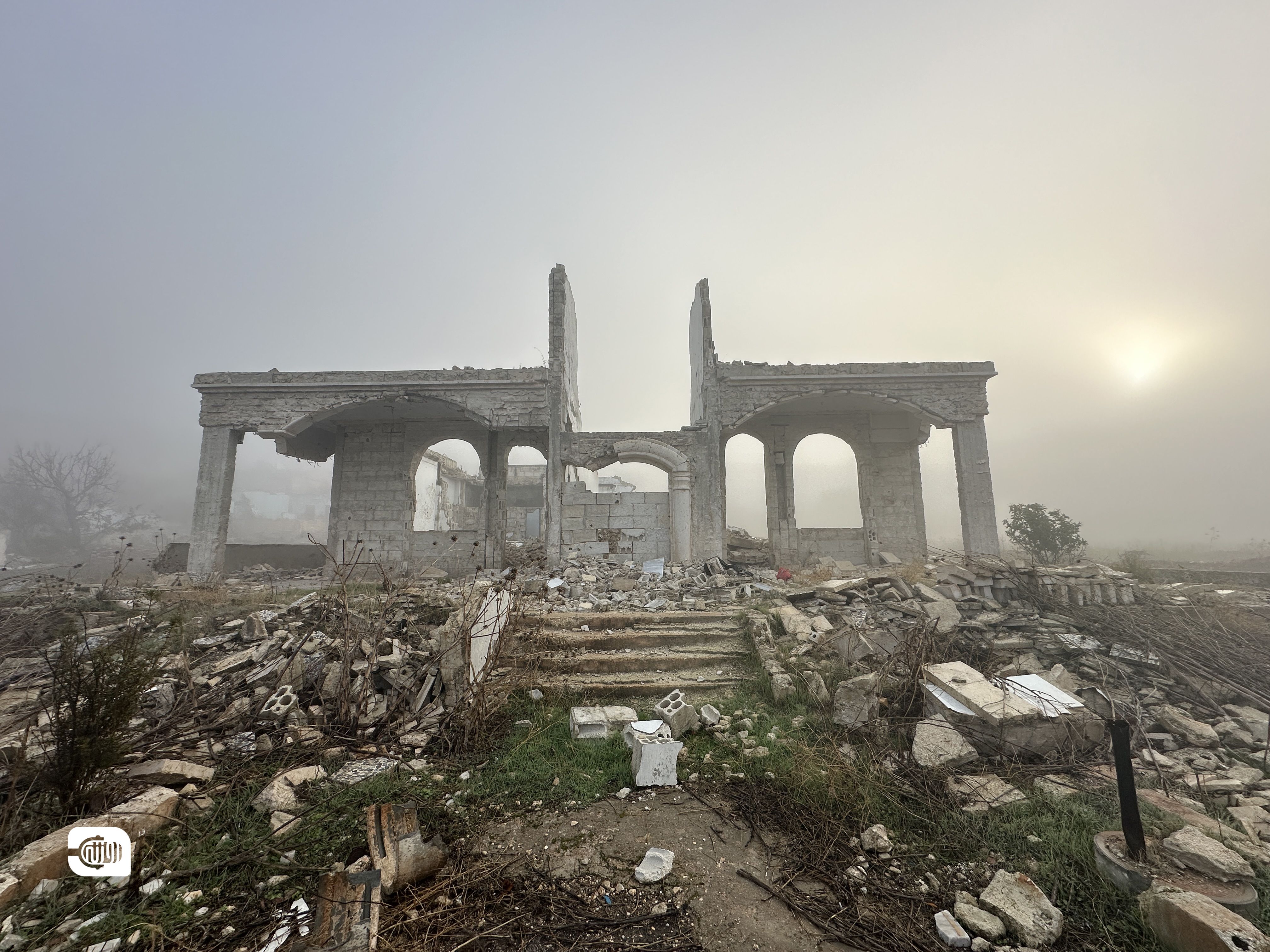
Rural Idlib Village Reduced to Ruins – Rozana
How Many IDPs Are There in Syria?
Syria’s internally displaced population is estimated at around 7 million people, distributed as of August 21 as follows:
4.8 million live outside displacement sites.
1.4 million reside in 1,782 camps and displacement locations in northwestern and northeastern Syria.
The military operations of November 27 last year, followed by the events in Sweida in July, generated over 894,000 new displacements.
A previous report on the humanitarian response to the events in Sweida stated that more than 158,000 people were displaced within Sweida and toward Daraa, Damascus, and rural Damascus, while at least 106 schools were used as shelters.
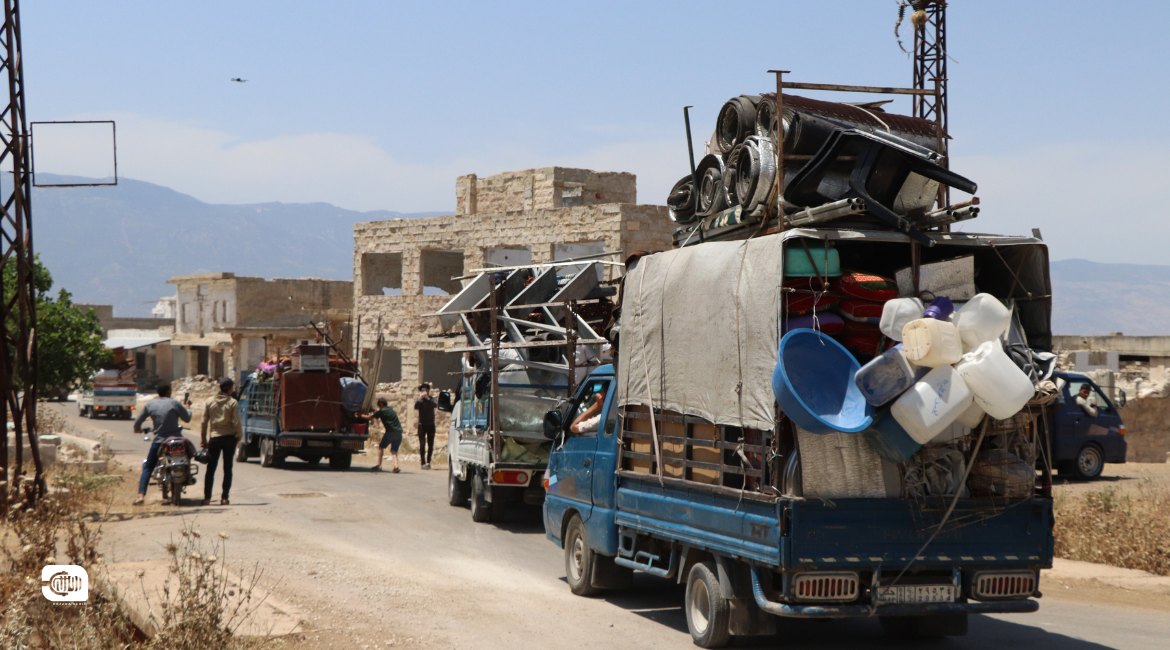
Displaced Syrians Return to Their Towns and Villages – Rozana
The Struggles of Returning IDPs
Reconstruction efforts in rural Idlib and Hama face enormous challenges due to soaring construction costs, lack of labor, and the absence of oversight and urban planning — all of which hinder the rebuilding of homes and infrastructure.
Some returnees have been forced to sell their property to pay for home repairs. But the low level of government and NGO support, combined with skyrocketing prices of building materials, has worsened their suffering and delayed their ability to re-establish stability after years of displacement.
Omar al-Hussein, from the town of Jarjanaz in Idlib’s countryside, sold his land to cover the cost of repairing his heavily damaged home.
“I restored my house, which was badly damaged, at a cost exceeding $5,000,” he told Rozana, noting that the house still needs painting and furniture before it becomes livable.
Al-Hussein is one of many trying to rebuild their homes at their own expense, having lost hope in the prospect of government or international aid for reconstruction.
Return rates remain low. Only a quarter of Jarjanaz’s original population has returned. Many of those who did come back now live in roofless houses or have pitched tents inside the walls of partially destroyed buildings, according to the town’s local council head, Ibrahim Hussein Dughaym.
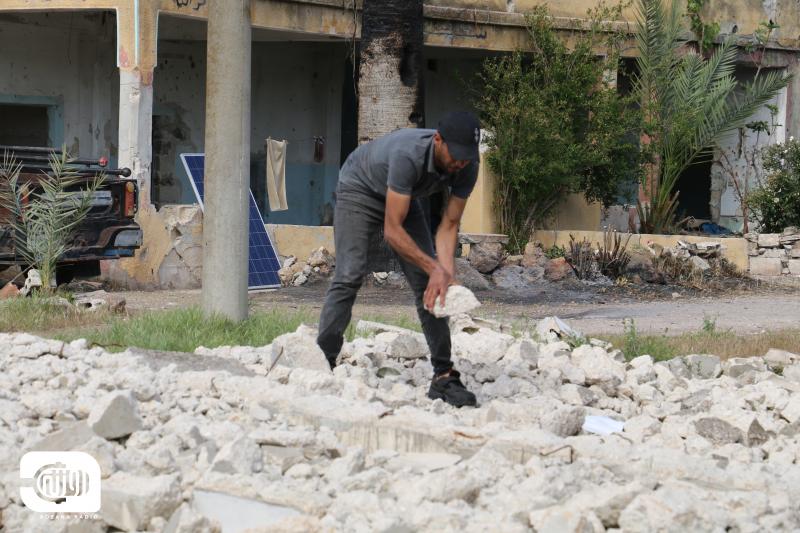
Displaced Syrian Reconstructs His War-Damaged Home in Rural Idlib – Rozana
How Many IDPs Have Returned?
According to a UNHCR report released at the end of last month, covering displacement figures since December 8, 2024:
1,950,090 IDPs have returned to their original or preferred areas of residence.
1,067,556 of them returned from displacement sites (camps, shelters, and others).
Most returnees came from northwestern and northeastern Syria.
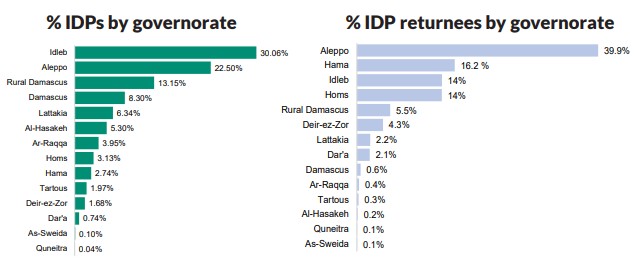
UN Statistics on Displaced People in Syria – UNHCR
Where Are Syria’s IDPs From?
IDPs from Idlib make up 30% of Syria’s total displaced population.
They are followed by:
Aleppo: 22.5%
Rural Damascus: 13%
Damascus: 8%
Latakia: 6%
Hasakah: 5%
Raqqa, Homs, Hama, Tartus, Deir ez-Zor, Daraa, Sweida, Quneitra: between 4% and 0.1%
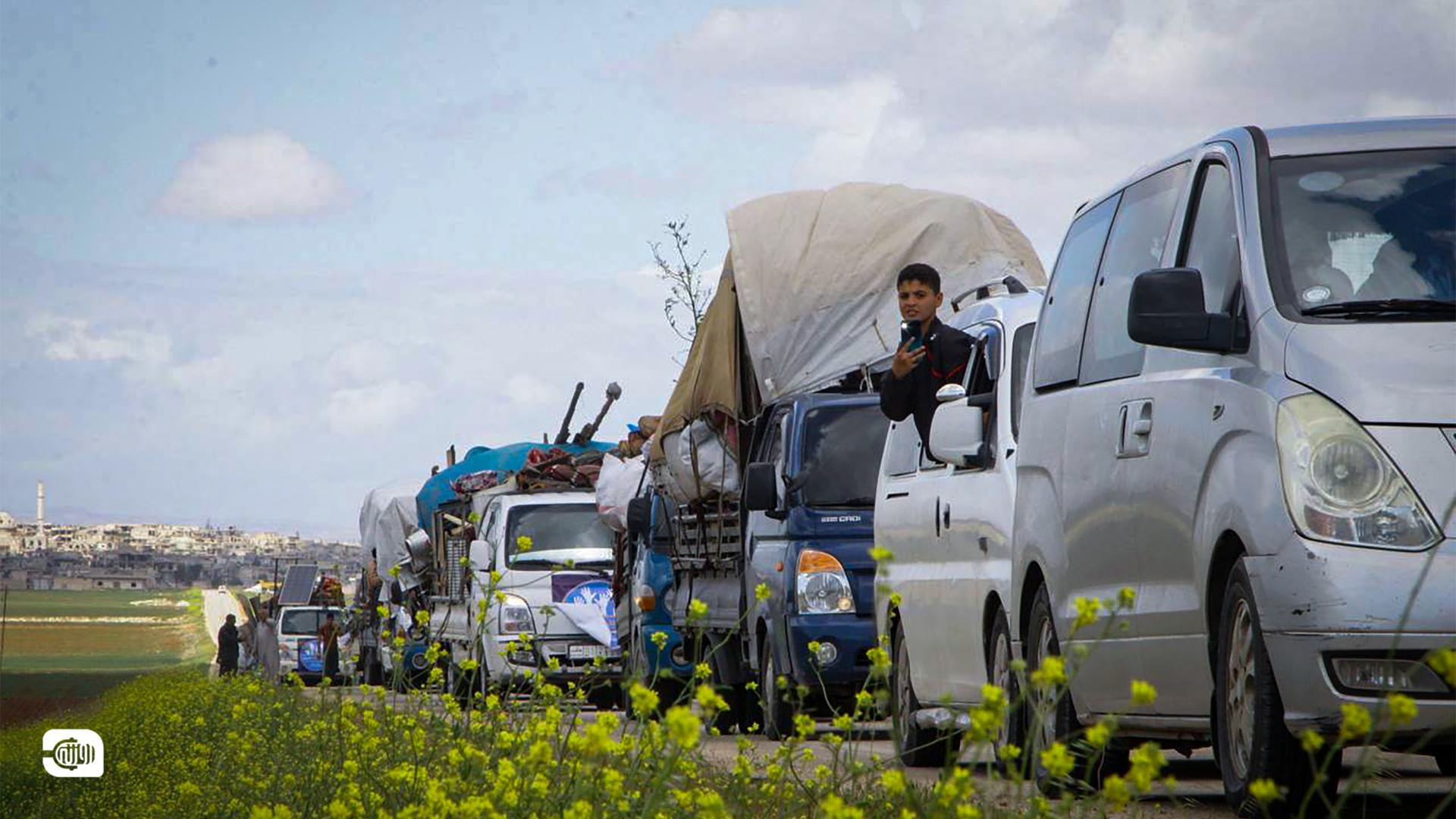
Displaced Syrians Return to Their Towns and Villages – Rozana
According to UN statistics, most IDPs plan to return to:
Aleppo (40%)
Hama (16%)
Idlib (14%)
Homs (14%)
Rural Damascus (6%)
Reality in Northwestern Syria’s Camps
A report by the Syria Response Coordination Group (October) shows only slight changes in living conditions inside camps:
More than 1.521 million civilians still reside in camps — 75.18% of the previous total.
Over 90% of families cannot secure heating materials for the coming winter.
Last year, 83% of IDPs received no heating supplies, especially in camps.
71% of IDPs in northwestern camps are reducing basic needs — especially food — to afford winter heating.
88% of families have a monthly income below $50.
Prices of heating materials have risen significantly, making access extremely difficult.
Grassroots Donation Campaigns
Several towns and cities — whose residents were displaced primarily to Idlib’s camps — have recently launched grassroots fundraising campaigns that succeeded in collecting millions of dollars to support key sectors such as health and education.
But needs remain far greater than available resources.
According to a World Bank Group report, the cost of rebuilding Syria’s damaged physical assets is estimated between $140 billion and $345 billion, with the most conservative estimate at $216 billion.
For millions of displaced Syrians, hope for an eventual return persists — accompanied by repeated calls for urgent action by the transitional government and international community to ensure that dignified return remains a priority in the coming year.
Contributed reporting: Bashar al-Fares